15 October 2006
Nudges and Deflections


Where is the next drink coming from?
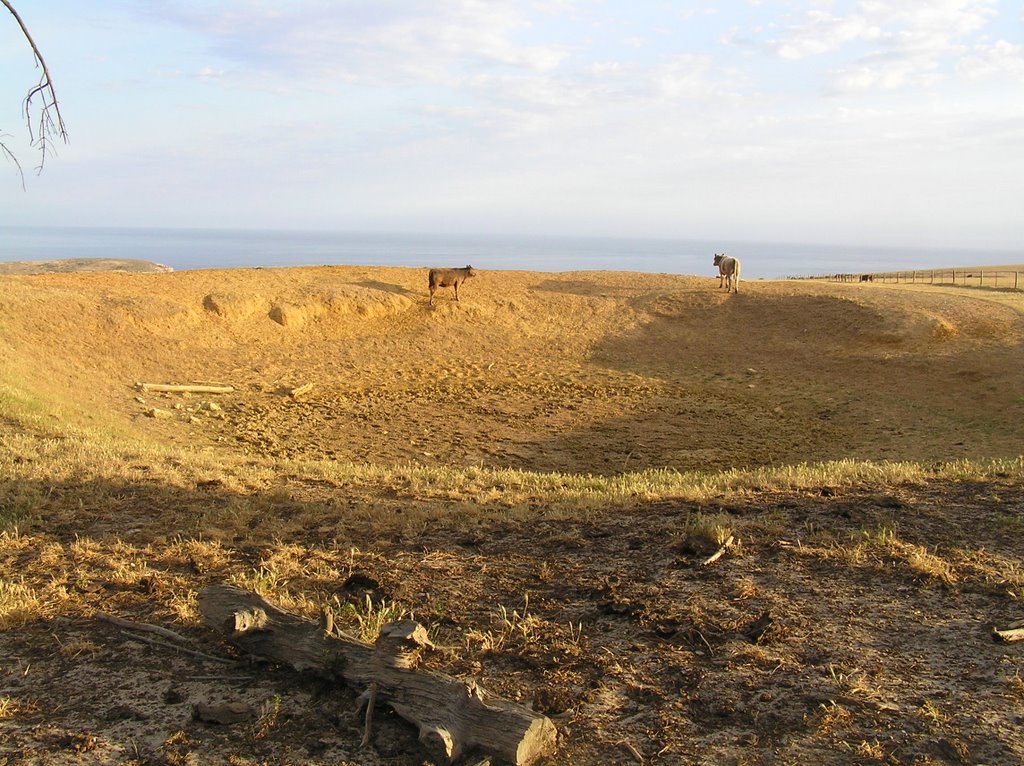 I took this on Friday near Victor Harbor, which is in, by South Australian standards, a high rainfall area. That's the sea in the background. The empty dam shown here would normally at this time of the year have enough water to satisfy the cattle.
Parish pump malfunction
In my letterbox today was the first communication I've received from my two local councillors, who were hoping to be re-elected in the forthcoming elections. They reported that because the only other candidate for the ward had withdrawn her nomination the State Electoral Office has deemed the election to have "failed". This means that the ward will be unrepresented, as their missive states," until a supplementary election is held sometime in 2007".
This is preposterous. Councils or, more specifically, elected councillors may not have much clout (they didn't do anything to modify the planned development next door to me which has now resulted in much of my natural light being blocked off) but some people, like me, believe that citizens should be given some opportunity to influence how they are governed. Even so, I'm not surprised that none of the Council's , State Electoral Office's , Local Government Association's , or the Minister's websites mention it.
This is all relatively small in the scheme of things, but it would be good to see something done, and soon, to remedy this.
12 October 2006
Another literary prize
The brief citation on the official website refers to Pamuk as a writer "who in the quest for the melancholic soul of his native city has discovered new symbols for the clash and interlacing of cultures". More detailed "biobibliographical notes" (in English) are posted elsewhere on the Svenska Akademien website.
At the same time as his win is announced comes a report from the BBC that the French lower house has voted in support of a bill making it an offence to deny that Turkey committed genocide against Armenians in 1915. If you know anything at all about Pamuk you'll know, as I've previously posted and
Pamuk, whose novels include ''Snow'' and ''My Name is Red,'' was charged last year for telling a Swiss newspaper in February 2005 that Turkey was unwilling to deal with two of the most painful episodes in recent Turkish history: the massacre of Armenians during World War I, which Turkey insists was not a planned genocide, and recent guerrilla fighting in Turkey's overwhelmingly Kurdish southeast.
''Thirty-thousand Kurds and 1 million Armenians were killed in these lands, and nobody but me dares to talk about it,'' he said in the interview.
The controversy came at a particularly sensitive time for the overwhelmingly Muslim country. Turkey had recently begun membership talks with the European Union, which has harshly criticized the trial, questioning Turkey's commitment to freedom of expression. The charges against Pamuk were dropped in January, ending the high-profile trial that outraged Western observers and cast doubt on Turkey's commitment to free speech.
Bookie Prize
While I'm on the topic, my eyebrows were raised by the official official Man Booker Prize website which features a link to the "Man Booker bookie". I don't particularly mind if people want to bet on the outcome, but what would happen if bookies were allowed to advertise on, say, the websites of sporting bodies?
09 October 2006
Watch out!
Here's a sample which captures the flavour of his style:
I don't like journalists who, in middle age, start to pontificate morbidly about the wickedness of a world that should be full of love, or who rummage through old notebooks in search of pessimism. So I own up at once. Surely we don't have to be weighed down by the baggage of history, always looking backwards and holding up billboards with the "The End of the World is Nigh" written in black for readers too bored to look at the fine print. Yet when I sit on my seafront balcony today, I am waiting for the next explosion to come.
Beirut is a good place to reflect on the tragedy through which the Middle East is now inexorably moving. After all, the city has suffered so many horrors these past 31 years, it seems haunted by the mass graves that lie across the region, from Afghanistan to Iraq to "Palestine" and to Lebanon itself. And I look across the waters and see a German warship cruising past my home, part of Nato's contribution to stop gun-running into Lebanon under UN Security Council Resolution 1701. And then, I ask myself what the Germans could possibly be doing when no guns have ever been run to the Hizbollah guerrilla army from the sea. The weapons came through Syria, and Syria has a land frontier with the country and is to the north and east of Lebanon, not on the other side of the Mediterranean.
And then when I call on my landlord to discuss this latest, hopeless demonstration of Western power, he turns to me in some anger and says, "Yes, why is the German navy cruising off my home?" And I see his point. For we Westerners are now spreading ourselves across the entire Muslim world. In one form or another, "we" - "us", the West - are now in Khazakstan, Afghanistan, Pakistan, Iraq, Egypt, Algeria, Yemen, Qatar, Bahrain, Kuwait, Saudi Arabia, Oman and Lebanon. We are now trapped across this vast area of suffering, fiercely angry people, militarily far more deeply entrenched and entrapped than the 12th-century crusaders who faced defeat at the battle of Hittin, our massive forces fighting armies of Islamists, suicide bombers, warlords, drug barons, and militias. And losing. The latest UN army in Lebanon, with its French and Italian troops, is moving in ever greater numbers to the south, young men and women who have already been threatened by al-Qa'ida and who will, in three of four months, be hit by al-Qa'ida. Which is one reason why the French have been pallisading themselves into their barracks in southern Lebanon. There is no shortage of suicide bombers here, although it will be the Sunni -- not the Hizbollah-Shiite variety -- which will strike at the UN.
This is Fisk at his best: describing the situation and outlining what will probably happen if things don't change. As ever, he doesn't suggest ways of avoiding this (and he's said elsewhere that it's not a journalist's job to do so), but it would be good to hear what he, with his all his experience and knowledge of the region, believes could be done to avert or even ameliorate some of the carnage he expects to follow. The closest he comes is at the end :
It's always been my view that the people of this part of the Earth would like some of our democracy. They would like a few packets of human rights off our supermarket shelves. They want freedom. But they want another kind of freedom - freedom from us. And this we do not intend to give them. Which is why our Middle East presence is heading into further darkness. Which is why I sit on my balcony and wonder where the next explosion is going to be. For, be sure, it will happen. Bin Laden doesn't matter any more, alive or dead. Because, like nuclear scientists, he has invented the bomb. You can arrest all of the world's nuclear scientists but the bomb has been made. Bin Laden created al-Qa'ida amid the matchwood of the Middle East. It exists. His presence is no longer necessary.And all around these lands are a legion of young men preparing to strike again, at us, at our symbols, at our history. And yes, maybe I should end all my reports with the words: Watch out!
08 October 2006
"Nets tomorrow at 9am. I trust I shall see you there": cricket revival in USA?
Worrall also describes the spread of the game beyond its original bases in Philadelphia and New York, though IMO he underrates the influence of the West Coast, where British Empire/ Commonwealth expats in Hollywood such as Sir C Aubrey Smith ( who once appeared for England at cricket as well as in many movies such as the 1939 version of The Four Feathers ), Laurence Olivier and Boris Karloff raised the profile of the game and where, as Cricinfo reminds us, a match was televised in 1958. It was "Round the Corner" Smith (the soubriquet derived from his bowling runup, not from any propensity to unsporting behaviour) who set the tone for the Hollywood Cricket club which he founded in the 1930s and which still continues with, we are told, support from such latter day cricket fans as Mick Jagger.
For the un-, or insufficiently, initiated The Smithsonian website also has a companion piece "Cricket for Dummies" by Matthew Engel the editor of Wisden. His (or his sub-editor's) summary: "It's a lot like baseball. Except that it's profoundly different". This and much of what he goes on to say is generally OK, though by describing bowlers' "throws" he may be sowing the seeds for future controversies if cricket really does take hold in the USA.
06 October 2006
Wrestling with ideologues
The front page of today's Australian features two articles which comment on the current state of Australian education and training. The lead story headline boldly asserts "Canberra to seize syllabus", while another headline "Skills crisis paves path to payday for Aaron,16" accompanied by a photo which makes the secondary story seem more important than the headline .
The first story quotes Education Minister Bishop:
"We need to take school curriculum out of the hands of the ideologues in the state and territory education bureaucracies and give it to a national board of studies, comprising the sensible centre of educators."
It? Is there really a single overarching curriculum, or is she really thinking of curricula for various subject areas? And who are the "sensible centre of educators" she has in mind? Her attempts to draw a comparison between the state education bureaucrats and Chairman Mao are grossly overstated and will deflect public attention away from the merits of some of her points. I can see the appeal of greater consistency across the board in many subject areas, but would be wary of a centrally imposed curriculum in subjects such as history and geography which
would inevitably tend to reflect the views of the Eastern states.
Aaron's story makes the Minister's concern about ideologues seem pointless, as the young man has turned his back on the school system and followed the lure of good money. The Prime Minister has endorsed this: "Not everybody is suitable for a university education and we have to get back to the time when a prized and valued technical qualification was as important to somebody's future as a university degree".
Did this time that "we have to get back to" ever exist? I doubt it. The PM and his acolytes, notably Ministers Bishop and Nelson, have had a lot to say recently about ideologues and school curricula. Aaron has already bought a car and is saving for a mortgage: he admits he was not a great student, but at 16 he seems to be wedded to many of the values which the government (and the opposition for that matter) espouse.
Minister Bishop made her provocative remarks at a History Teachers' conference. Matt Price was also there: his views are much closer to the "sensible centre" of opinion than the Minister's.
The first story quotes Education Minister Bishop:
"We need to take school curriculum out of the hands of the ideologues in the state and territory education bureaucracies and give it to a national board of studies, comprising the sensible centre of educators."
It? Is there really a single overarching curriculum, or is she really thinking of curricula for various subject areas? And who are the "sensible centre of educators" she has in mind? Her attempts to draw a comparison between the state education bureaucrats and Chairman Mao are grossly overstated and will deflect public attention away from the merits of some of her points. I can see the appeal of greater consistency across the board in many subject areas, but would be wary of a centrally imposed curriculum in subjects such as history and geography which
would inevitably tend to reflect the views of the Eastern states.
Aaron's story makes the Minister's concern about ideologues seem pointless, as the young man has turned his back on the school system and followed the lure of good money. The Prime Minister has endorsed this: "Not everybody is suitable for a university education and we have to get back to the time when a prized and valued technical qualification was as important to somebody's future as a university degree".
Did this time that "we have to get back to" ever exist? I doubt it. The PM and his acolytes, notably Ministers Bishop and Nelson, have had a lot to say recently about ideologues and school curricula. Aaron has already bought a car and is saving for a mortgage: he admits he was not a great student, but at 16 he seems to be wedded to many of the values which the government (and the opposition for that matter) espouse.
Minister Bishop made her provocative remarks at a History Teachers' conference. Matt Price was also there: his views are much closer to the "sensible centre" of opinion than the Minister's.
05 October 2006
Not in our backyard
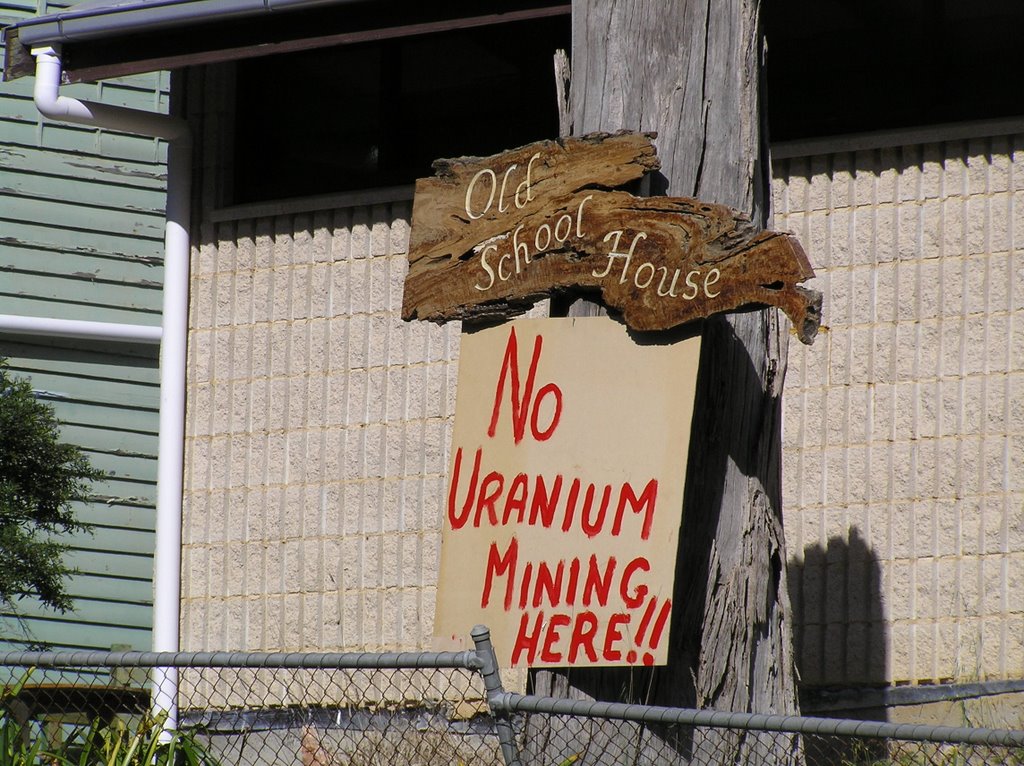
In a media release Premier Rann has pooh poohed the idea:
“Under Don Dunstan’s 1971 mining act companies have a legal right to explore,” Mr Rann said.
“However, this does not give companies the automatic right to develop or establish any mining activity without the approval of the Environment Protection Authority and the State Government.
“While I am Premier of this State there will be no uranium mining established anywhere near Myponga Reservoir.”
Marathon, the company concerned, has, according to the ABC, "moved to allay fears that the area would ever be mined".
That said, the reported comments of Dr Santich, the CEO of the company,
"Down there at Myponga we've known since we put in the application that it was highly unlikely that we'd ever get a permit to mine, even if we found what you call a viable deposit which would have to be massive and very rich...Nevertheless it's worth exploring, it's worth getting that knowledge."
suggest that we may not necessarily have heard the last of the matter.04 October 2006
65 years on: another clue in the HMAS Sydney mystery?
Almost 65 years after the event many questions remained unanswered, notably how the Sydney could have been surprised by the Kormoran and why there were 317 survivors of the Kormoran
The official view is summarised on RAN and Australian War Memorial websites. Some alternative theories are evaluated here.
In 1999 a Parliamentary Joint Standing Committee on Foreign Affairs, Defence and Trade reported on the loss of the Sydney. Here is the link to the full report. The Summary of Conclusions and Recommendations is here . It concurred with one author's opinion (prefiguring Donald Rumsfeld's on a broader range of issues) that much about the loss was "unknown and unknowable", but ended with a rousing but essentially hollow appeal to all parties:
The Committee is well aware that the level of interest in Sydney and her fate is so extensive that, regardless of the outcome of this inquiry, individuals and groups will continue to research the topic and expound on their various theories. This is to be welcomed, if it is undertaken with an openness to the information available and a willingness to listen and to take into consideration opposing views. ...The Committee strongly believes there is a need for all involved in the Sydney debate to move beyond animosity and antagonism and find common ground. No one group 'owns' Sydney, or has a monopoly on truth. The Committee hopes that in future researchers will rise above the personal acrimony and suspicion that has marred so much of the debate thus far. An exchange of differing views is a positive process, and can only lead to a better understanding of the events of November 1941. HMAS Sydney deserves no less.
Since then there have been moves to locate the Sydney's wreck, and an organisation Sydney Search Pty Ltd has been set up to do this. The Federal (($1.3 m), WA ($500,000) and NSW (($250,000) governments have provided or promised funding to assist with the search, preparations for which have gone quiet after a report in September 2005 that it would begin "within months".
Perhaps Tony Barrass the writer of today's Australian
02 October 2006
Does the unadorned truth often prevail?
A-G's wake up call on torture
Yesterday on ABC TV's Insiders the Attorney-General Mr Ruddock, speaking from Washington, played his customary straight bat on several matters related to his portfolio, including a trial date for David Hicks ("needs to be dealt with expeditiously") and what constitues torture ("I don't regard sleep deprivation as torture").
In today's Australian Bill Leak has a cartoon titled "Humane torture" showing the AG as one man band (bugle, banjo, drum) demanding admittance to a Sleep Deprivation facility saying "I'm here to help...". Enough said?
29 September 2006
England XI to field XVI: is it cricket?
England has apparently requested that either one ( according to Adelaide Now aka The Advertiser online) or both (according to Cricinfo )three day preliminary matches will become basically centre wicket practice.
In one sense this harks back to the nineteenth century where matches were often played against odds, eg England v XVI of Woop Woop. Then however it was the local opposition, not the touring team, who were allowed to augment their numbers to even up the contest. Now it seems that anything goes, including downgrading matches which have been advertised for some time as first class.
Cricinfo reports this feeble attempt to justify the proposal:
John Buchanan, Australia's coach, said England's request was just a continuation of what is now a common practice. "They want to be able to use as many players as they can, so really they're treating it, as most teams do, as game time and match practice in different conditions," he said. "Albeit that they might not be totally similar to exactly what you're going to play on, but it is time in Australia out in the middle, playing cricket and preparing."
I can't see the rationale behind this: it might be out in the middle and preparing, but if players can be rotated at will this makes a mockery of the game.
Of course, if the last few Ashes tours and reports of the state of fitness of the selected squad are anything to go by, it is quite possible that England won't have more than 11 fit players for these games. If so, what will happen: back to plan A or cancel them?
28 September 2006
All change on the buses?
On one hand there's been a lot of speculation about potential changes, including service reductions; on the other there's been a lot of spin from the government about better services et al.
I've run an eye over many of the changes, which will take effect from 15 October, and to me they look like a case of the more things change the more they remain the same. Many routes have been tweaked, and renumbering some gives the impression of many more changes than are in fact the case.
That said there are still some issues which the authorities have ducked , such as how to improve the provision of services accessible to physically disabled people. The current policy of publicising only routes which are totally wheelchair accessible instead of, as happens elsewhere eg Darwin, inviting disabled patrons to contact the bus company and request an accessible bus for the particular service they wish to travel on, is shortsighted and prevents the company (and the government) from earning a few brownie points.
25 September 2006
Regional media
After
I raised an eyebrow when Monica Attard used Wollongong as her principal example of "regional" media: I thought it was part of the greater Sydney conurbation. That said, the program provided a considerable amount of information, some of which is expanded in the program website. For example, check out Minister Coonan's answers to the questions submitted to her for confirmation (if you needed it) that doublespeak still flourishes.
If the program had a shortcoming it was that it concentrated on the commercial electronic media, and didn't balance this perspective by referring to the ABC. The fact is, as I can attest from my recent travels in the interior, that the ABC is the only substantial source of local news in regional areas. Newspapers aren't available in the morning (though some may be accessed via the web) and when they do arrive they cost much more than in the southern capitals: the weekday Australian sells for $3.00 in Darwin and $2.20 in Alice Springs. ABC local radio is a valuable source of local and other news (and the various websites are an archive of information for tourists and others - for an example which I've used see ABC Kimberley) .
ABC punches below its weight
"Inspiring stories of the human spirit" is the ABC's website puff for Australian Story , which tonight plumbed new depths of banality by featuring a female WBC featherweight boxing champion who is also a fundamentalist Christian and, if this is any indication, has a literacy problem (though she aspires to "memorize the Bible").
I'll post this though I'm not sure that this froth should be blown any further.
24 September 2006
Doctor Warne bending the elbow?
Cricinfo reports that there was some ill feeling in the Hampshire v Lancashire cricket match where the Hampshire skipper, Dr Warne , was piqued by the opposition's refusal to give his team a sliver of opportunity to win the game outright.
No balled for throwing? The photo of the incident shows a well flighted ball delivered by a gunbarrel straight arm. Wearing a cap to deliver a ball and not running in are not illegal: I recall seeing West Indian Chris Gayle doing the same last year in a ODI v Pakistan .
Anyone who thinks that tossing a ball high in the air is somehow against the spirit and laws of cricket needs to be reminded that another doctor, Arthur Conan Doyle, as Michael Parkinson reminds us,
23 September 2006
Breaking news or false lead?
As I post this hasn't been picked up by many other media outlets, though
I'll be interested to see whether any of these matters (the leak, the report and the death itself) are corroborated.
20 September 2006
One year on
I hope to keep it going but also to work on improving it, eg by writing more frequently about books I've read and films I've seen. These are modest aims but I'll try to keep them in mind over the next year.
18 September 2006
Relative work value changes
In 1973 a backbencher's base salary was $10,000 whereas that of a four year trained teacher at the top of the scale was $8,150, ie the backbencher earned 123% of the teacher's salary.
By 2003 the respective amounts were $106,000 and $56,126: the backbencher now earned 189% of the teacher's salary!
It would be interesting to see similar comparisons with other occupations, though not limited to predominantly public sector ones such as nursing and police.
17 September 2006
Going for the doctor of spin
Shane Warne has been awarded an honorary PhD by Southampton Solent University. According to the university's website
The Pro-Chancellor who officiated at the ceremony said
Unfortunately the new doctor soon afterwards, as The Times reported, required the services of a medical doctor to attend to an injury sustained on the paying field.As arguably the greatest bowler who has ever lived, Shane Warne is highly deserving of this honorary doctorate. His sporting success is an inspiration to all, and is particularly close to our own hearts given the university’s commitment to sporting achievement. We felt it was only fitting to break with tradition and confer this degree at the Rose Bowl, the home of Hampshire cricket, in recognition of the huge contribution he has made not only to international cricket but to the success and popularity of cricket in the Hampshire region.
Dr Warne has also been in the news recently for allegedly disturbing the harmony of the Australian team.
Perhaps the last word for the moment should be Geoff Boycott's advice to him:
Australia are the favourites this winter. I really think they will win unless the injury tally evens itself up. They are fit and fresh and well-rested. Some people say Shane Warne is creaking, but I say he took 40 wickets in last summer's series. Richie Benaud reckons Warne will be back for the 2009 Ashes and the only thing that makes me think otherwise is that Warney's life is full of escapades. If he slept with his bat, like I used to, he could probably manage another five years.
16 September 2006
Border security breached in WA
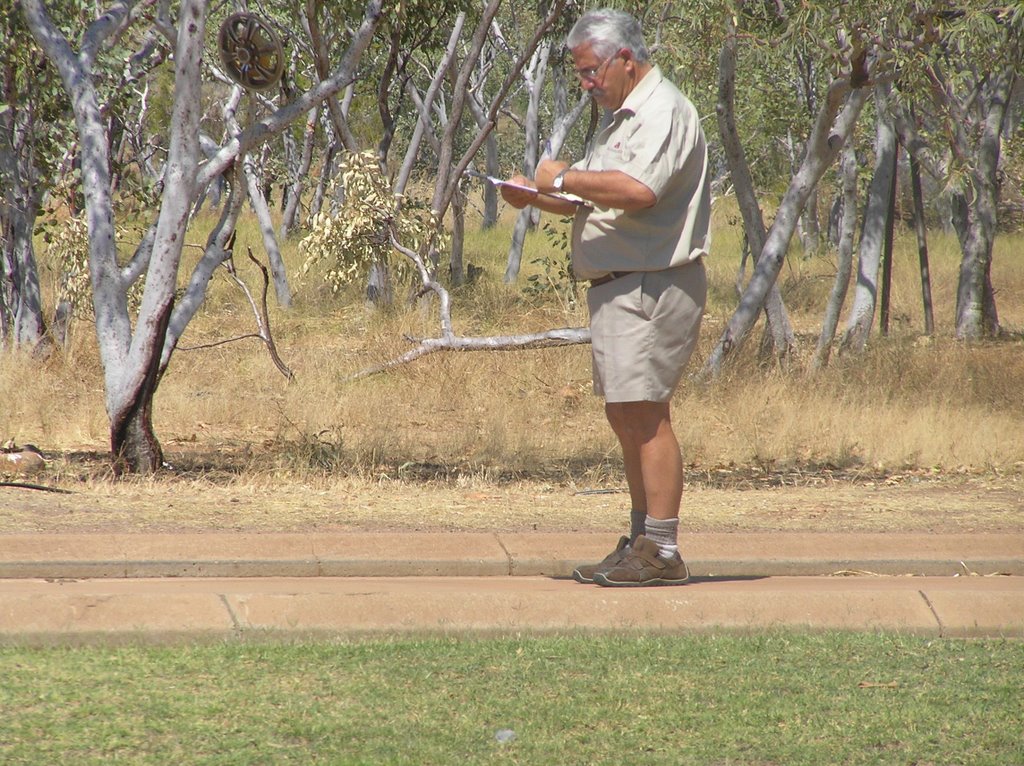
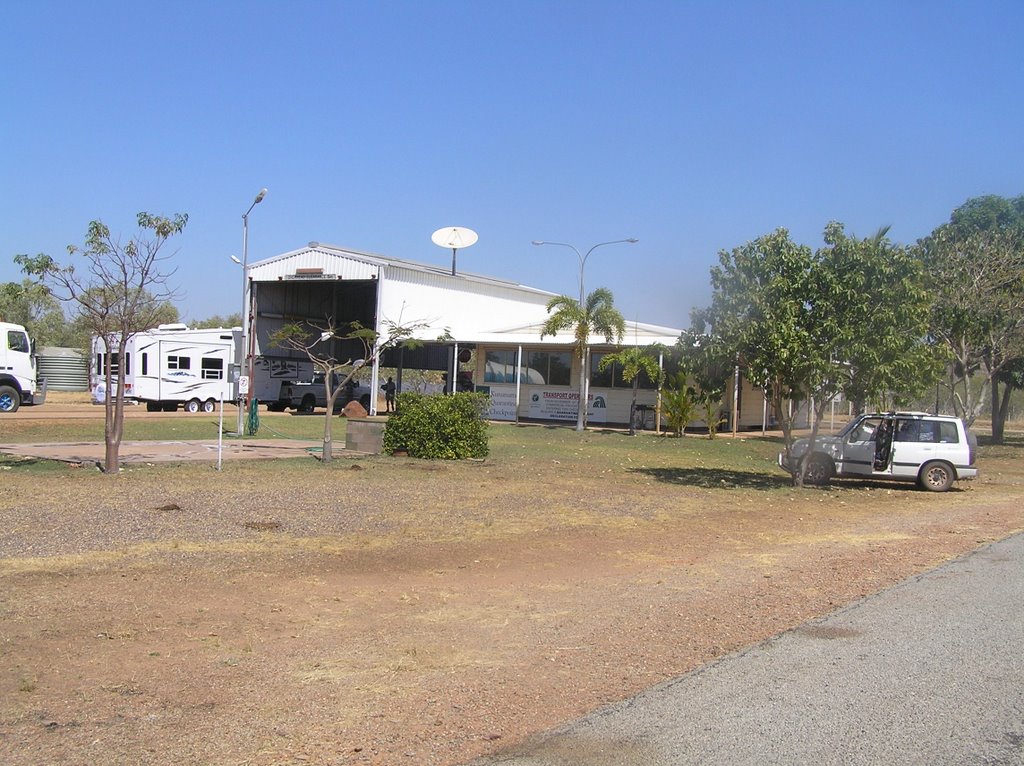
Perhaps not everyone passing the checkpoint was
13 September 2006
Free media?
Yesterday's Crikey referred to an article by
In Australia the free newspaper (many of them owned by News Ltd) has long been a feature of the suburban lawnscape, though it's not quite like London situation where the free papers have been used as bait to entice readers to fork out for a bulkier edition later the same day.
The costs of printing and distributing newspapers throughout our dispersed suburbs must be huge, and while a lot of people, including me, like to be able to hold something in their hand (if only to do the crossword puzzle or to have something to read on the bus) it may be that we can be weaned away from our reliance on print. After all I read bits and pieces of many papers on the web already.
Here in Adelaide both The Advertiser and The Independent Weekly have a free daily email each weekday which are sent out within minutes of each other to anyone who requests them. This competition doesn't guarantee that they'll report all the local news that's fit to email: yesterday neither reported the latest rumours about Mitsubishi, but it may be another indication of the way the wind is shifting.
Alternative Prime Minister?
Not only does this have all the indicia of policy made up on the run (as his predecessor was apt to do) but, as Matt Price in The Australian put it so pithily:
Come on, Kim : you need to do better than this.
England selects
I wouldn't write the English off so far in advance but on paper the team looks weaker than that which won the Ashes last year: the only possible improvements I can see are (assuming Read is preferred to Jones)
11 September 2006
Five years on

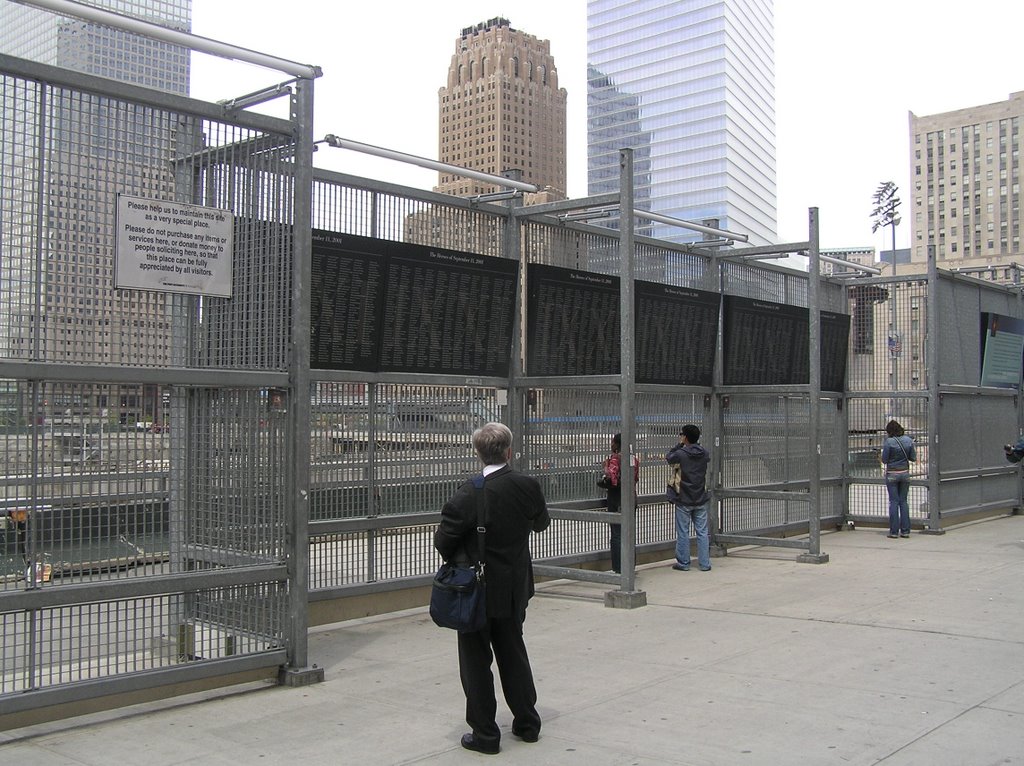
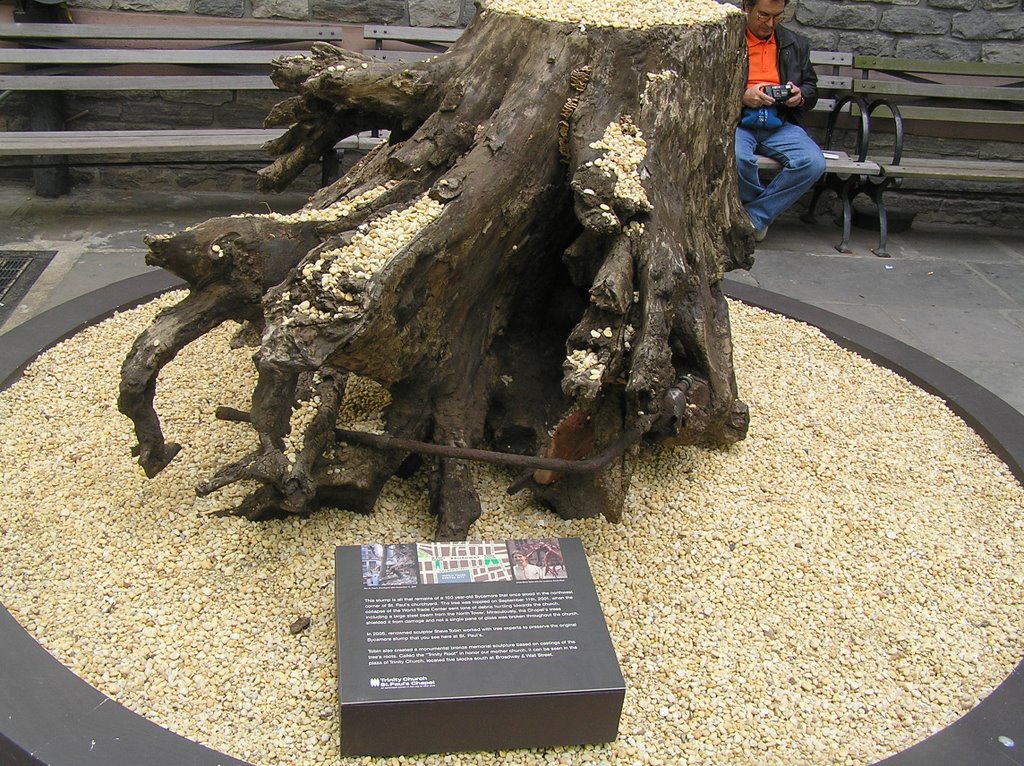
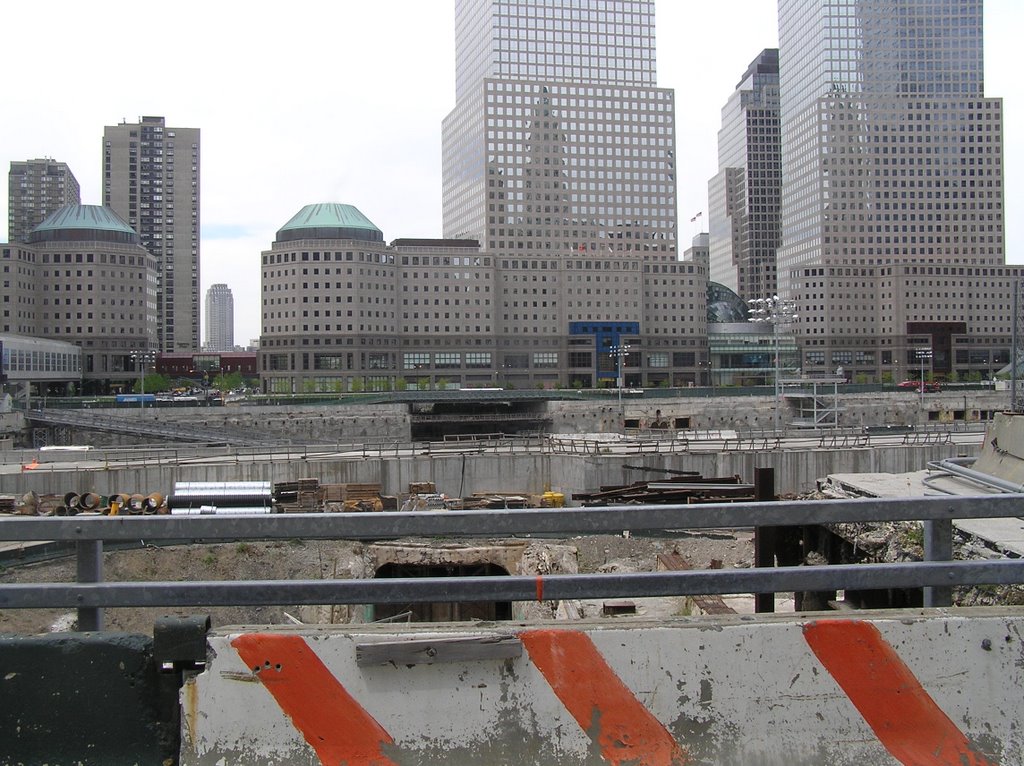
Almost every western media commentator has had, it seems, something to say about the fifth anniversary of the attacks on the World Trade Centre. I don't have their analytical ability but, as I did visit the site earlier this year and took the photos above, I will post my one cent's worth .
Two pictures are of the site itself; the other two are of an adjacent churchyard dating from the 18th century (Ground Zero can be seen in the background of one of them) which was largely unscathed except for a tree uprooted by the blast.
When I was there I paused to reflect upon the destruction and the loss of life. I have never been in a place where so many innocent - and, despite what others may say, they were innocent - people have died at one time as a consequence of the actions of other humans. I know that there have been many other "occasions" (an unsatisfactory term, but I can't think of a more appropriate one just now) where there has been greater loss of life, but I will always remember my visit to Ground Zero and hope, though am too cynical to expect, that there will never again be deaths on this scale.
10 September 2006
GNE 2006


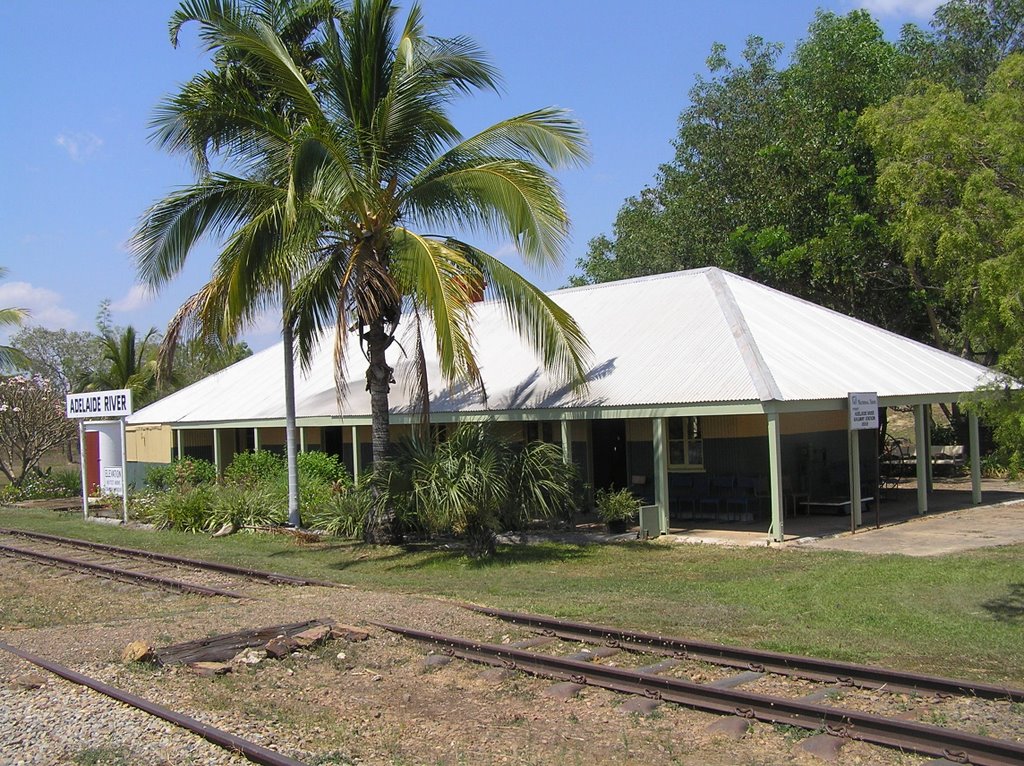
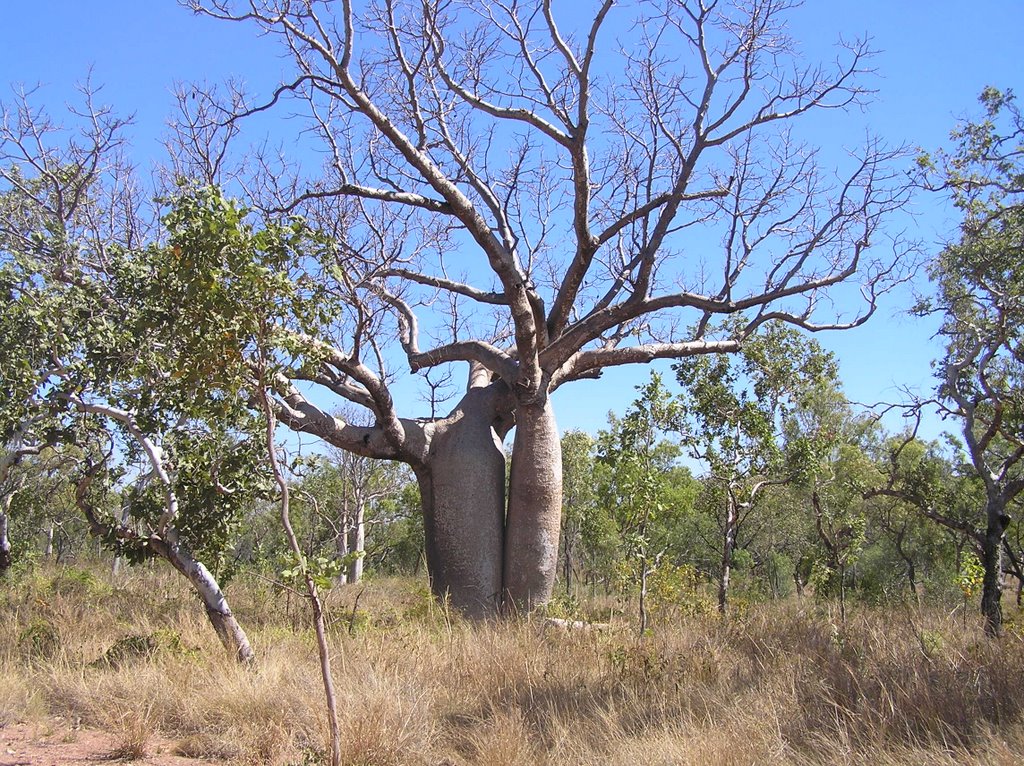
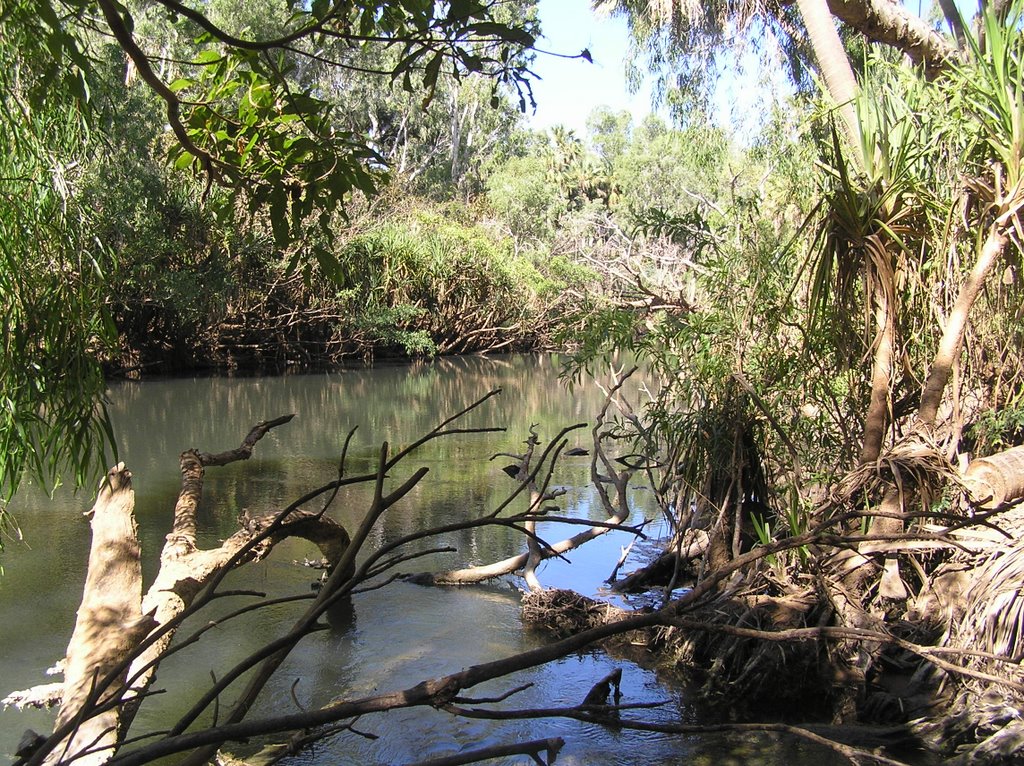

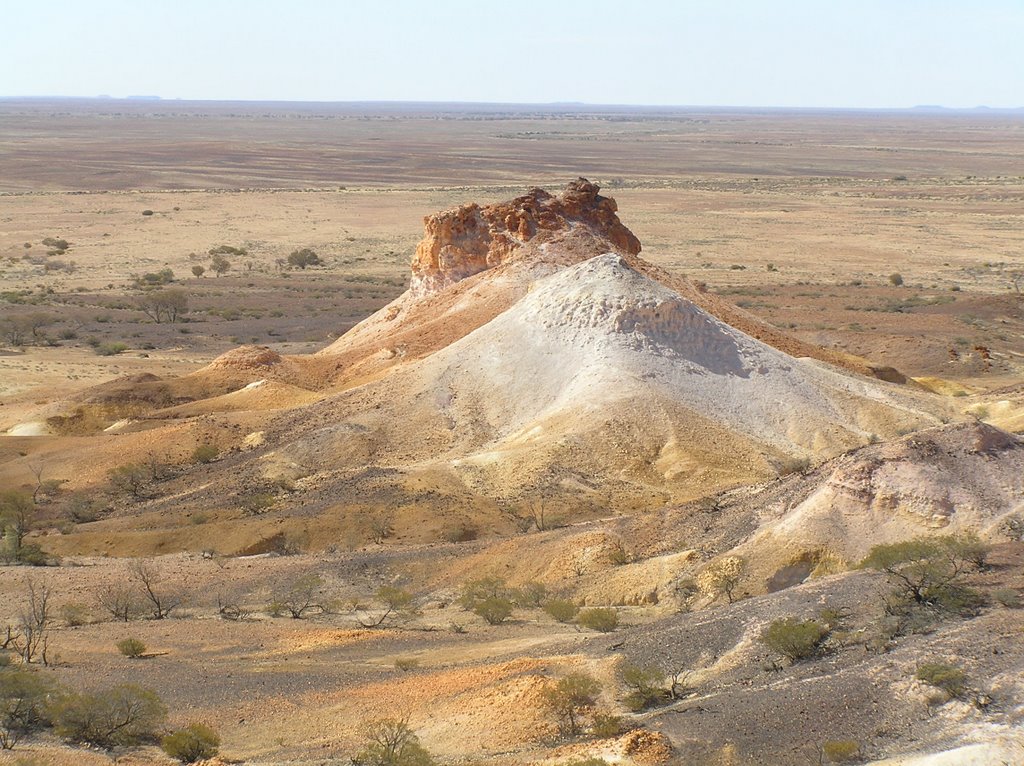
Summary of journey [added to blog July 2007 from notes taken at the time].
Day 1
Adelaide - Coober Pedy via Stuart Highway.
880 kms
Day 2
Coober Pedy.
34 kms
Day 3
Coober Pedy - Breakaways (see photo).
82kms
Day 4
Coober Pedy - Alice Springs via Stuart Highway.
713 kms
Day 5
Alice Springs - Renner Springs via Stuart Highway
690kms
Day 6
Renner Springs - Dunmarra (Stuart Highway)
206 km
Buchanan Highway (see photo of road train) - Top Springs - Victoria River Downs (pass) - Victoria Highway - Gregory National Park (see photo of boabs)- Limestone Gorge
476 km
Total for day:682 kms
Day 7
Walked to East Baines River through washed out area.
Drove Limestone Gorge - Timber Creek - WA border (zealous quarantine inspection) - Kununurra.
297 kms
Day 8
Kununurra - Wyndham and return (see photo of me dipping foot in water).
255 kms
Day 9
Kununurra - Lake Argyle/ Ord River Dam - Gregory's camp - Timber Creek - Sullivan Camp (Gregory NP) (many flies but Hobson's choice).
435 kms
Day 10
Sullivan Camp - Katherine - Edith Falls Nitmiluk NP (first safe swimming spot on trip).
247 kms
Day 11
Edith Falls - Pine Creek - Adelaide River (see photo of station) - Batchelor ( car cooling system problem required rescheduling of proposed trip to Litchfield) - Howard Springs.
326 kms
Day 12
Howard Springs - Palmerston for car repairs; I took bus into Darwin. Collected car in pm.
33kms (car)
Day 13
Howard Springs - Batchelor - Florence Falls, Litchfield NP (resuming planned itinerary). Car clocked up 130,000 kms near Elizabeth River.
126 kms
Day 14
Litchfield NP tour: Buley Rockhole, Tolmer, Wangi (walked above waterfall).
67 kms
Day 15
Florence Falls - Batchelor - Snake Creek Railway remains - Pine Creek - Edith Falls.
282 kms
Day 16
Edith Falls - Katherine - Mataranka Homestead (near thermal pool).
181 kms
Day 17
Mataranka - Larrimah (Stuart Hwy); Larrimah - Birdum (rough track following railway line) for Birdum 2006. As in 2005, a most interesting group of people.
92 kms
Day 18
Rode the NAR (see photo), then drove Birdum - Larrimah (rough track), then back onto Stuart Hwy; brief diversions to Daly Waters and old Stuart Hwy near Banka Banka otherwise on to Tennant Creek (Outback Caravan Park - v good).
520 kms
Day 19
Tennant Creek - Stuart Hwy - Alice Springs (spent c 2 hrs there inc quick visits to Old Ghan and Road Transport museums - both worth seeing) - SA/ NT border. Camped with ( as I calculated) my head in NT and legs in SA. Among campers were a French couple cycling south.
831 kms
Day 20
SA/ NT border - Coober Pedy.
414 kms
Day 21
Coober Pedy(dep 0655) -Port Augusta via Stuart Hwy - Wilmington - Melrose - Clare - Adelaide (arr 1907).
896 kms.
Total trip: 8083 kms.
07 September 2006
Colin Thiele
I'm not in any way belittling Steve Irwin, but I knew Colin Thiele. Many years ago I was a student at the teachers college where he was a lecturer and was impressed not only by his ability to evoke South Australian life and landscapes in his writings but also by his willingness to give his time to encourage others to read, and not just his books.
His passing is sad, but his substantial body of work will remain, as will the fond memories of people such as me, those who have sent letters to The Advertiser, and many more whose minds have been stimulated and enriched by reading his books.
Resumption of service
Yesterday evening I returned from GNE2006, after driving all day from Coober Pedy. Watch this space for more details of the trip, and for more frequent postings on other matters.
15 August 2006
'Tiser keeps abreast of the times
There's an identity crisis in the Adelaide media, or at least that large chunk of it owned by News Ltd. The Advertiser has recently revamped and renamed its website Adelaidenow (no space between words). This is the only website of the News metropolitan dailies which has changed its name from that of the parent paper. Notwithstanding this, Adelaidenow is offering a free subscription to the (online only) " Advertiser PM Edition" (or "edtition" as the home page describes it ).
Adelaidenow or Advertiser? Is this a marketing exercise designed to gauge the interest in a separate online infotainment daily (which, as Adelaidenow does, can draw its stories from all over the News empire) or is it evidence of in house divisions in the city where Mr Murdoch began his rise to global ascendancy?
13 August 2006
A community event
This scavenging, and that word with its negative connoations doesn't seem quite right has become a local custom, and one to which little if any stigma is attached. It gives neighbours something to talk about, and more of them do stop to talk about it and some, such as my next door neighbour, act informally to assist potential collectors. I believe that it provides a modest form of community strengthening: by doing our bit to tidy up our own homes we sometimes even help our neighbours in unexpected small ways.
10 August 2006
Advertisers out of step with reality
As the media, including the BBC , Aljazeera and news.com.au report, air travel to and from UK airports has been disrupted by what the BBC describes as an "airlines terror plot".
A common thread of all reports, supported by references to and pictures of chaos at Heathrow, is that intending travellers should defer travel if possible or otherwise be prepared for long delays and extra security precautions, including restrictions on cabin baggage (which seem to extend to personal reading matter).
As I seek more information on the subject, the advertisers who fasten on to my searches seem oddly inappropriate, to say the least. Here are some example of "sponsored links" (sponsored not by me needless to say):
Airport London Taxi (LHR)Transfer to and from (LHR) Pay a Fixed Price 0870 38 99 777
www.minicabhire.com
Luxury Mercedes in South East UK 1st Class Taxis at Great Rateswww.mercury-travel.co.uk
London airport transfers by minibus, chauffeur or coachconciergedesk.co.uk
Compare cheap flight deals to Heathrow from top airlines.Heathrow.OneTime.com
08 August 2006
Census: room at the internet
Tonight I completed my census form on the internet. I wouldn't have been surprised had the census website collapsed under the pressure applied by the estimated 1,000,000 others doing likewise, but it didn't. Whether this was because fewer than expected chose this option or because the system had been built strong enough to carry the load, or whether others have had a different experience, I don't know, but I'll give credit where credit is due and say "Well done ABS".
Fourth test snippets
Where there's mucking about there's money
I'm listening to the BBC radio online description of the Headingley England v Pakistan test. Because the game was evenly poised at the start (though is no longer as I type with Pakistan 5/84 at lunch chasing 300+) a good crowd turned up but caught the ground authorities napping.
The BBC invited the Yorkshire secretary to explain why so many people willing to pay 15 quid ($38) to get in had to wait for so long to do so. His explanation was bizarre: each ticket had to be sold individually, and then the stubs reconciled, presumably while the queues inched forward.
I'll be interested to see how widely this bumbling is reported elsewhere in the British media.
Sun's cricket man gives soccer a boost
In the lunchtime discussion a panel including John Etheridge, the Sun's cricket writer (is "correspondent" too multisyllabic a term for that paper?), ruminated about various matters sporting. In the course of conceding that this northern summer's cricket season hadn't grabbed the public's imagination as last year's had done, Mr Etheridge actually referred to the world game as "soccer". I hope that all the people in Australia who have insisted that the game be called "football" take note.
Mud soup in Guantanamo: on the Cuban side of the wire
Despite my criticism of the practices allegedly condoned by the authorities supervising the US "facility" at Guantanamo Bay I'm not entirely blind to the shortcomings of the Cuban regime on the other side of the wire. Spiegel Online (English version) reports how the regime treats dissidents, for example "
07 August 2006
The man who wasn't there
Today's Australian "Cut & Paste" section (p15, not online) prints an excerpt from what appears to be a review on ABC Radio National by Imre Salusinszky of "Honour Bound", a "theatrical performance based on the imprisonment of David Hicks". The excerpt includes these comments
David Hicks doesn't present himself automatically as a subject for these performances. Artists have to accept responsibility for the choices they make, and I think this one is not just out of touch with the Australian community, but somewhat offensive, given what international Islamism has done to us.
We all say that al-Qa'ida is the enemy and we have to flush them out before they kill again, yet we choose this one man, who admits to being in al-Qa'ida and, because he has an Australian passport, make him the focus of protests and petitions and films and plays. There's a great inconsistency here.
Mr Salusinszky did indeed say these words on the arts program The Deep End (audio still available) last Thursday. What The Australian didn't say (apart from that Mr S is its NSW political reporter) is on the program website: "
In its arts pages today the paper does print a review of Honour Bound
"Hicks's jail tale triggers passionate response" by John McCallum, who appeared with Mr S on The Deep End discussion.
It's clear from his descriptions of the action
In a vast steel cage, six performers, choreographed superbly by Garry Stewart, are surrounded by projected texts and video, enveloped in sound and voices, and awash with harsh, shredded light as they fly, hang or turn in the air, crashing against the bars, floor or each other and dance violently, abjectly or tenderly around this frightening, nightmarish space"
that he has actually seen the piece, though he acknowledges that
Because David Hicks has become such a powerful symbol -- a monster, a victim, a terrorist, a martyr, depending on who's talking -- it will anger and upset different audiences for different reasons.
Now that his piece has been mentioned in The Australian I wonder whether Mr S will be clarifying that he didn't see the performance. Somehow I doubt it.
04 August 2006
Stop it, you'll go bland
What is this practice? If you've not deduced the answer already, read the article.
Levity aside, Furedi makes many pertinent points, not just about the subject of tomorrow's event. Take this for example:
In recent decades, intimate relationships between people appear to have become more complicated. The expectation of failure and of instability surrounds the institution of marriage, even of cohabitation. It is now common for people to approach their private relationships with a heightened sense of emotional risk. Popular and academic culture contributes to this process: it helps to legitimise our insecurities regarding the possibility of finding love and experiencing fulfilling and passionate relationships.
Today’s ‘therapy culture’ transmits clear signals about ourselves and our attachments to others. We are continually instructed to attend to our own needs in order to fulfil ourselves. Even happiness is discussed as a problem if its realisation depends on others. Indeed, feelings that distract individuals from the goal of self-fulfilment are often defined in negative terms. That is why in many self-help books the feeling of love, especially of the intense and passionate variety, is treated as a problem. Although love is portrayed as the supreme source of self-fulfilment, it is also depicted as potentially harmful because it threatens to subordinate the self to another. The passionate feeling of love towards another person is represented as destructive and dangerous.
03 August 2006
Gratuitous comments about community standards
After pointing out that The Age is the odd person out in the Fairfax media in this respect , he goes on to argue that in Australia there is a "community standard"of a "modest tip, usually of between 5 and 10%.
IMO this is balderdash: the Australian practice, custom, community standard, call it what you will, is that tipping in restaurants is not obligatory, though it may be voluntary eg where a higher standard of service than expected has been provided , or where a group of people have chipped in to cover the cost of their meal and there is some change left over. If tipping is accepted as a "community standard" we won't be far away from the situation common in UK, and perhaps other countries, where an "optional" or "discretionary" service charge (in my limited experience usually 12%) is added to bills.
02 August 2006
Britain doesn't waive rules on rubbish
The UK Daily Mail has recently reported some bizarre examples of the British nanny state in action.
They include instances of
The authorities have also not gone soft on adults who break the increasingly prescriptive laws.
At least a small measure of commonsense seems to have prevailed in the case of the woman who was
I try to do the right thing with my waste, which is put into wheelie bins for collection, but I'll be even more vigilant now in case my local council tries to enforce crackbrained rules like these.
01 August 2006
Farewell VHS movies
Today I culled my collection of VHS movies and consigned most of them to the bin to await tomorrow's collection.
I'm always on the lookout for new DVD releases (and rereleases), both local and international, though I'm annoyed by regional coding(what's happening to it under the Aust-US Free Trade Agreement?) which puts barriers in the way of Australians who want to buy DVDs available elsewhere.
I'd also like to see more reviews of DVDs in the media. The SBS Movie Show has IMO been unfairly terminated but its ghost lingers, at least for the moment, on the program's website. ABC TV's otherwise worthy At The Movies doesn't deign to review DVDs, which leaves the local street mag Rip It Up and Lawrie Zion's "Letterbox" column in The Weekend Australian as my principal sources of information on new DVD releases. Unfortunately neither the mag's reviews nor Lawrie's column are online.
Last weekend's, Lawrie asked his readers to nominate movies which aren't available on DVD, either because they've never been released or are no longer available. A brief look at IMDb will reveal many films, eg the Charles Chauvel Australian movies Jedda and Sons of Matthew and world cinema greats such as Satyajit Ray's Charulata , which are not available in that format, even though many of them are or have been available on VHS.
I'll be getting in touch with Lawrie and adding my five cents' (or more) worth. If you have your own suggestions you can contact him at lawrie.zion@bigpond.com
Subscribe to:
Posts (Atom)

