27 January 2006

The his-story man

I have read the Prime Minister's address to the National Press Club . Much media comment has focused on the PM's references to the importance of history and history teaching, eg

Quite apart from a strong focus on Australian values, I believe the time has also come for root and branch renewal of the teaching of Australian history in our schools, both in terms of the numbers learning and the way it is taught. For many years, it’s been the case that fewer than one-in-four senior secondary students in Australia take a history subject. And only a fraction of this study relates to Australian history. Real concerns also surround the teaching of Australian history in lower secondary and primary schools. Too often history has fallen victim in an ever more crowded curriculum to subjects deemed more ‘relevant’ to today. Too often, it is taught without any sense of structured narrative, replaced by a fragmented stew of ‘themes’ and ‘issues’. And too often, history, along with other subjects in the humanities, has succumbed to a postmodern culture of relativism where any objective record of achievement is questioned or repudiated.

Part of preparing young Australians to be informed and active citizens is to teach them the central currents of our nation’s development. The subject matter should include indigenous history as part of the whole national inheritance. It should also cover the great and enduring heritage of Western civilisation, those nations that became the major tributaries of European settlement and in turn a sense of the original ways in which Australians from diverse backgrounds have created our own distinct history. It is impossible, for example, to understand the history of this country without an understanding of the evolution of parliamentary democracy or the ideas that galvanised the Enlightenment.

In the end, young people are at risk of being disinherited from their community if that community lacks the courage and confidence to teach its history. This applies as much to the children of seventh generation Australians or indigenous children as it does to those of recent migrants, young Australian Muslims, or any other category one might want to mention. When it comes to being an Australian there is no hierarchy of descent. Whether our ancestors were here thousands of years ago, whether they came on the First Fleet, in the 19th century, or whether we or our ancestors are amongst the millions of Australians who have come to our shores since the Second World War, we are all equally Australians – one no better than the other.

As a former history teacher I'm pleased to see him calling for an increase in the "numbers learning" (despite the mathematical- utilitarian associations of this phrase). When, however, he links this with a call for radical changes in the way history is taught my feet start to turn cold. He envisages a revised orthodoxy ("structured narrative") replacing the "fragmented stew" so that everything becomes much clearer to the students. His story (of Australia) becomes the new history.

Elsewhere in the address he presents his view of what the John Howard structured narrative might look like:

The great struggle of Australia’s first century of nationhood was to reconcile a market economy with a fair and decent society. At the start of the 21st century, we have found a healthier balance in our political economy between public and private – one in keeping with the times and the contemporary character of the Australian people.

What "great struggle"? This sounds like Marx or Lenin for dummies. How, for example, do the two wars and events within them such as Gallipoli, fit into this scenario?

On the other hand his comment about the "heathier balance" implies that we are well down the road to Utopia (and have switched to driving on the right hand side). At best is a self-serving view of current events, at worst hubristic balderdash.

For an alternative perspective see
this.


Crescent Moon

Today I went to the Crescent Moon exhibition at the AGSA. I was expecting it to be good and it exceeded my expectations. The subtitle Islamic Art and Civilisation in South East Asia is a succinct summary of the content. The exhibition includes many examples of other traditions and cultures which influenced (or were influenced by) Islamic art and culture, such as fabrics and designs from India and China, aboriginal art depicting the Makassan traders who visited the north of Australia for centuries, and European china plates. One of many exhibits which remains in my mind's eye is a ceremonial umbrella made (with a generous supply of gold thread) in Rajasthan and exported to South East Asia.

The exhibition finishes its Adelaide season this weekend but is moving to Canberra from late February to March. For further details see here. If you can't get there the sumptuously produced guide is worth a look (or borrowing, or buying if you can afford $80).


25 January 2006

Radio National again


Update: The ABC has since I posted this contacted me and apologised for the stuff up.


Just as I was composing a post congratulating ABC Radio National on its new program schedule I received an email from the producers of Bush Telegraph telling me that my guestbook post commenting on outback fuel prices had been approved.

This is what I submitted on 5 October last year:

Your report today on fuel prices in Central Australia may have been compiled when prices were at their highest. I drove from Darwin to Adelaide in early September on the last leg of an 8,500 km outback trip and was pleasantly surprised how low prices were compared to the cities now and compared to a previous trip in 1998. In September the difference between city and outback prices was rarely more than 20c a litre: about the same as it was seven years ago. Even where prices are higher they are usually justified by remoteness. Even if I don't need fuel I usually buy something from each roadhouse where I stop as they provide an important service to outback travellers.

Is this too controversial for the ABC to deal with promptly? At least they haven't edited/ censored it.


23 January 2006

ABC Radio National


Today the
Australian reports that the presenter of ABC Radio National Breakfast Program has been counselled for inappropriate comments. What he did was to
ask David Hicks's US military lawyer a forthright question "
if David Hicks is released, will it in fact be a very dramatic illustration that the only reason he's been in Guantanamo Bay over these past four years is because of the bloody-mindedness of the Australian Government?"

A forthright question, which should perhaps have been directed at the government but one which needs to be asked.


20 January 2006

Earle's caught?

Today, despite all the competing demands for space in its sporting pages, the Advertiser gives a full bodied report of SA's defeat of Tasmania at cricket. The reporter seems to be parodying the old cricket writers who got paid by quantity (number of words) not quality, as in "the shimmering haze of a crazed Mediterranean heat drained SA's attacking energy in the first session" and [after a key wicket fell] "the repressive mood engulfing the Redbacks, desperate for maximum points, promptly lifted."

Need more? We are told that one of the Tasmanian players
"executed a rebellious ton that included 15 boundaries and several mini-partnerships with the tail."

I checked to see whether Tasmanian readers were fed the same rich soup. Mr Murdoch's print media reach means that his Hobart outlet the
Mercury can economise by taking the reports from the Advertiser's man on the spot. Perhaps the Mercury has better sub editors or perhaps Tasmanians are less tolerant of verbosity, because the Mercury's report, also attributed to Richard Earle is much less florid. The innings of the Tasmanian who the Advertiser said "executed a rebellious ton" is described by the Mercury as "a bold if fruitless 130".

Which came first: the Advertiser or the Mercury report, and who really wrote each? Is the real Richard Earle willing to stand up?

Rumours of Bill Lawry's replacement are exaggerated...

Just as I was thinking that Bill Lawry might have been eased out of the Channel 9 cricket commentary team he bounced back today with a description of the new gee-whiz sightscreen at the Docklands Sauna/ Stadium (sometimes ka Telstra Dome). He gave a boffinesque explanation of its technical features which made me sit up and listen and, for a while, ponder whether it was really him, or a soundalike, speaking. Fortunately the voice quickly followed up with an "it's all happening" which allayed my fleeting doubts. No one says it like Bill does (or as often as he does).

Putting which foot forward?

I haven't seen this mentioned in the conventional media though it's had a good run online. On the one hand it's reasuring to know that the US Vice President (one heartbeat or should it be one false step away from the Presidency?) is as fallible as many of us; on the other we may well wonder whether this man and his entourage of minders can't do better than this. For a more acerbic comment see
Wonkette

19 January 2006

Snakes on the grass


There wasn't much venom in the pitch at Lahore where India and Pakistan have just played a high scoring draw which will keep the statisticians busy for many a day.

Herpetology and cricket aren't often linked but occasionally the two come together. In 2000 play in the Tamil Nadu - Punjab match at the M A Chidambaram Stadium in Chennai/ Madras (where tests are played) was interrupted by a snake in the outfield. The incident was mentioned in
Wisden 2001 at p1395 and by The Hindu which reported, in a manner reflecting the Indian veneration of snakes, that the reptile "had to be guided out of the ground".

More recently in rural Victoria, as the Herald Sun reports "a deadly brown snake turned out to a be a lucky charm for a teenage cricket star". The young man in question took a hat trick two days after being bitten by the snake. The report doesn't state what happened to the snake: presumably it wasn't "guided out of the ground".


17 January 2006

Stone throwing from within the glasshouse?

The Strewth column in today's Australian has an item "The untold story" which has a dig at The Age for allegedly not printing stories filed after 1pm. This is a bit rich given the Oz's propensity, at least in the edition printed and delivered in Adelaide, to overlook news breaking after lunch. The sporting coverage is especially deficient. Today's Oz has scores of yesterday's play in only two of the three first class cricket matches being played around the country and those only go up to lunch time (ie about 1pm). Things don't seem to have changed much since the Oz began 40 +years ago.


14 January 2006

Highly recommended by...


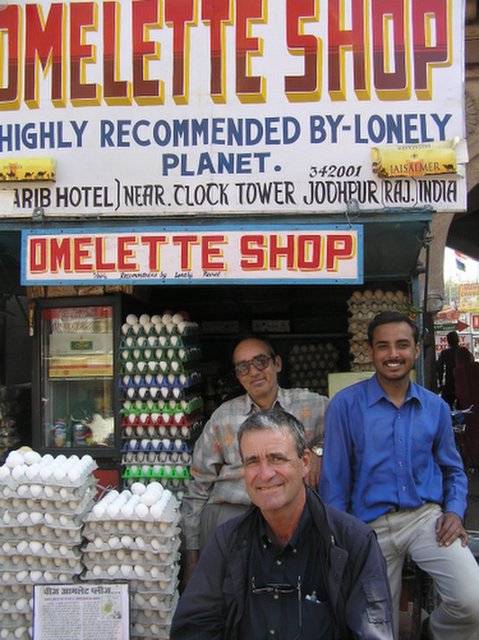
I''ve borrowed the latest edition of the LP guide to Rajasthan, Agra and Delhi from the library to check out a few points about my trip last year.

The guide recommends this establishment. As the photo suggests so do I. The product range may be small but the business name says all that needs to be said.

It is an islet of order, great value and friendly service in a sea of noise and movement which verges on chaos.

Posted by Picasa

11 January 2006

Ascending Mt Lofty

As the weather today wasn't too hot ( 27.6 deg max in the city) I decided to walk from Waterfall Gully to Mt Lofty on the main (most direct) walking track, which has recently been reopened after repairs to damage caused by the November floods. During the closure walkers were diverted to other longer and IMO less attractive tracks elsewhere in Cleland Conservation Park.

To give them their due the National Parks authorities have moved relatively quickly and put in a replacement at the top of First Falls. The force of the torrent must have been considerable: for as long as I can remember a tree trunk segment with a diameter of at least 60cm had been wedged under the bridge.


The impact of the floods is still clearly visible. The torrent has cut a swathe through First Creek above the First Falls (the ones visible from the car park) so that it now looks as if it is possible to walk much of the way along the creek line without being obstructed by blackberries and other vegetation. It's almost as clear as I recall it after the Ash Wednesday fires 23 years ago.

Where the official walking track runs above the creek line, which is most of the way, it has escaped major damage. Only in one or two places, such as Wilson's Bog, has it been badly eroded but nowhere is it impassable to walkers who take reasonable care. The disabled access, which previously extended to the Second Falls, now only goes just past the top of the First Falls, so some further work will need to be done to restore the track to its previous condition. As a regular user I'd be happy to volunteer to help. What I wouldn't want to see is another long closure, such as happened a year or so ago when part of the track was closed for months to repair a small landslip.

The damage along Waterfall Gully Road is being repaired without closing the road (if there was the slightest hint that this might happen there would be a huge outcry from residents). Transport SA not the Burnside Council is doing this work.


As for the walk itself it was extremely pleasant (as it usually is). The steep climb in the upper part of the track made me sweat but as I reached the open ground on Davenport Ridge a cooler breeze kicked in. Near Wilson's Bog I observed a couple of firetails, a bird which I don't recall seeing in Cleland before, which is not to say that they are unknown there.

Time for the walk: just over 59 minutes (I was aiming to do it in less than an hour). As I'd not done it for a while I was quite pleased with this. I returned on the 823 bus which was well patronised, though everybody had a seat even on the connecting 165.


10 January 2006

Groundbreaking research or just stirring the pot?


Today the Australian's gossip column Strewth reports that some enterprising researchers at the Macfarlane Burnet Institute have used their tea breaks (and other probably other time) to research the phenomenon of disappearing teaspoons. At first I thought this was a hoax, even though 1 April is some time away, but the BMJ website lists it.


Summertime

Here in Adelaide at this time of year we expect it to be hot, and it has been. What do I mean by "hot"? Start with 30 degrees C + and keep it at that level for a few days when old houses like mine absorb so much heat that it's cooler outside than in, except perhaps for an hour or two before dawn. Up north, eg Coober Pedy, Alice Springs, Mt Isa, the temperature most days lately has risen above 40 deg. I've heard some locals from those parts say that they can cope because while it may be hotter the heat is drier (even when the monsoon storms and humidity move down from the north). Hmm.

This makes it sound unpleasant but humankind can bear a fair burden of climatic reality, ie is able to adjust. This doesn't mean business or exercise as usual but a sensible adaptation to the climate.

For my part in the hot weather I make the occasional daytime foray outdoors, usually to head to somewhere such as a cinema or library where I know it will be cool. When I emerge into the real Adelaide world hotbox I find that I can begin to appreciate the benefits of the climate, such as being bathed in warm air, and not having to wear layers of clothing. Unless a hairdryer wind is not blowing there is occasionally a brief cooling zephyr which temporarily mitigates the worst of the heat.


09 January 2006

Language or dialect?

Another report from today's Australian tells us that teenage girls are the most powerful influence on the evolution of the English language around the world. "Language"? Why not "languages" or "dialects"? If not does this mean that I and many of my acqaintances are illiterate?

One ex-politician invokes the memory of another

In today's Australian Neil Brown, described as "a former federal minister and deputy leader of the Liberal Party" (do you remember when that was?) invokes some of Winston Churchill's recently published WW2 comments in favour of executing Hitler and his close associates summarily to support his view that more ruthless measures are needed to combat terrorism.

Mr Brown says (striving unsuccessfully to give a Churchillian ring to his words) " we will get nowhere if we are anything short of ruthless and if we continue to handicap ourselves, as we are now, by self-imposed moral and legal principles that are outdated, counter-productive, highly theoretical and guaranteed to do nothing but give the enemy an advantage that could ultimately lead to our defeat."

This is all very well, but note (1) the WW2 German leaders who were captured were put on trial (flawed though the processes were), (2) Saddam Hussein is currently on trial (no sub judice in Iraq?) and (3) Mr B is fuzzy about where all this might end (or if it will).


A commonsense view of David Irving

The BBC reports that Deborah Lipstadt, one of David Irving's major adversaries and one whom he has pursued (unsuccessfully) through the courts, thinks that he should be let go. Professor Lipstadt is quoted as saying "I am uncomfortable with imprisoning people for speech. Let him go and let him fade from everyone's radar screens." IMO an eminently commonsensical view.


US not in for long haul in Iraq?

Further to my post yesterday about Custer Battles the Washington Post recently reported that the US does see an end in sight for rebuilding Iraq. As usual John Quiggin has some apposite comments, as do many other bloggers - click on some of JQ's links or try a Google search for Ellen Knickmeyer to find out more.


08 January 2006

Custer Battles in Iraq: is the last stand nigh?

See this from the current London Review of Books. Decide for yourself what is hearsay and what is heresy.

One of the US firms mentioned in the article is Custer Battles whose website describes Iraq as
"a nation and marketplace wrought with challenges, obstacles, and malevolent actors. " Don't despair, because CB assures us " Iraq offers contractors, traders, entrepreneurs as well as multi-national enterprises an unprecedented market opportunity. The ability to identify, quantify, and mitigate this myriad of risks allows successful organizations to transform risk into opportunity. " Read on for more in this vein.


A word for our times?


The Age reports that a panel of linguists in the USA has voted"truthiness" as the best new word for 2005. It is defined as "
the quality of stating concepts one wishes or believes to be true, rather than the facts".

Words such as "doublespeak" at least assume that the user is conscious of the deception inherent in what they are saying. "Truthiness" gives liars, dissemblers and prevaricators a free hand to say what they like as long as they wish (not necessarily believe) it to be true. Will the "truthiness" defence come to be accepted in legal proceedings?

For other examples of trends which need watching see here .

Let's not forget that this year is the 60th anniversary of the publication of Geroge Orwell's Politics and the English Language an incisive essay which still scrubs up pretty well.


03 January 2006

A cricketer of his time

Gideon Haigh is an erudite and elegant writer on cricket and other topics. Although he is generally thought of as an Australian, he reminds us in the introduction to A Fair Field and No Favour, his recently published collection of his writings on the 2005 Ashes tour, that he is English by birth and an English cricket supporter.

Cricinfo has just published a piece by him on Bert Ironmonger , the pre -Second World War slow left arm bowler.
The title "Tough in life and in cricket" sums it up well:

His was the Australia of rural hardship: Ironmonger was the youngest of ten children to a farming family who had to abandon working an uneconomic block north-west of Ipswich, whereupon at twenty-five he became a labourer on the railways. His was also the Australia of long-term labour: after arriving in Melbourne in December 1913, and working as a barman and tobacconist, he took a job as a gardener with the St Kilda City Council, tending parklands with a handmower until the age of 70, even though his wages were suspended when he was away from work playing cricket.

Ironmonger is the member of a genus of Australians almost vanished from today's land of plenty, a man of what used to be called steady habits,: he was frugal, conservative, neither smoked nor drank, and lived with his wife and children in the same unprepossessing house, with flower beds and vegetable patch, for forty years; they did not have a telephone until 1939, and never owned a car.


31 December 2005

2005 viewing and reading

Best New Release Film

Downfall :
hardly a conventional biopic but a penetrating insight into the minds of Hitler and some of his acolytes as the Third Reich crumbled.

Best Novel read

Saturday (Ian McEwan)


29 December 2005

Varieties of free speech

I recently came across this item from Spiked . While I don't agree with David Irving's holocaust denying think it's counter productive to threaten him with imprisonment for words he said years ago. He is variously described in the article as a "British historian" and a "racist crank", terms which you might think are incompatible with each other.

The case of Orhan Pamuk, the Turkish writer, is more interesting to me, not only because it is continuing at the moment but also because I'm reading Robert Fisk's The Great War for Civilisation, which includes a lengthy chapter "The First Holocaust" on the 1915 massacres in Armenia. Fisk is well aware of Turkish sensitivities on this matter and draws attention (see pp 418 - 429) to some recent airbrushings and equivocations by the US and British governments and media. He also mentions (at p 430) other recent instances where discussion of the massacres has been aired in Turkey, while acknowledging the red rag responses they elicited .

Spiked, asserts that both cases are the same:

"both [ Irving and Pamuk ]could be incarcerated, not for physically harming another person or for damaging property, but for the words they spoke; both could have their liberty removed because they expressed views that the authorities - in Turkey and Austria - decree to be distasteful. And both of their trials are an outrage against the principle of free speech. You may or may not agree with what Pamuk said, and you probably are disgusted by Irving's weasel words. But this isn't about what either author said; it is about whether they should have the right to say it, and we should have the right to hear it. Freedom of speech, as its name suggests, does not mean freedom for views that go down well in polite society but not for views that stink: it means freedom for all speech, the freedom to think, say and write what we please and the freedom of everyone else to challenge or ridicule our arguments."

In today's Hurriyet the Turkish Justice Minister is reported as saying of the Pamuk case "All we need is democratic patience", whatever that means, though he "declined to give details of steps to be taken on the issue".

"Democratic patience" has, like most doublespeak, a bland fuzziness about it. Does it really mean "undemocratic impatience"? This would seem to be more in tune with the current environment of fear and anti-terror legislation.


27 December 2005

UK appeals against Hicks

The BBC reports that the British government is to appeal against the recent court decision that David Hicks is eligible to apply for British citizenship. The story is accompanied by a photograph of a very youthful looking Hicks: doubtless it predates his incarceration in Camp X-Ray.

Vale Mr Packer

The first I heard of Kerry Packer's demise was this morning when I tuned into his TV network to watch the test cricket, a game he'd reshaped to suit his own ends.

The love of cricket seems to have been one of the few things that he and I had in common, but I wonder whether those who succeed him, whether family members or others, will share the same commitment to supporting the game. The panel of experts assembled by Channel 9 this morning at the MCG to deliver their personal eulogies - Richie Benaud, Ian Chappell, Tony Greig and Bill Lawry - reminded me of how much a part of the summer living room furniture they have become over the last 25+ years. The sight of them together on the screen also reminded me that three of the four are older than me. Some of them will be difficult to replace.

If Kerry Packer was responsible (which seems to have been the case) for choosing Richie Benaud to lead the commentary team then he deserves to be remembered as a benefactor of the game.


26 December 2005

Christmas brought to you by whom?


Photo taken yesterday at the front of a local church. The sign in the foreground, with the sponsors' name featuring prominently, suggests that they, not the church, are running the event.

Posted by Picasa

22 December 2005

Incident in the Mall

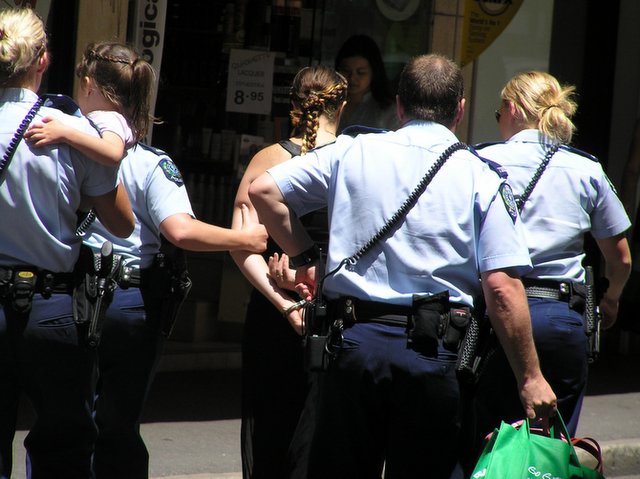
I took this photo in Rundle Mall this afternoon.

I came upon the scene as the woman in the middle of
the picture was
being led away handcuffed. There
had apparently been some trouble between her and the child being carried by the officer on the left

being carried by the officer on the left.

I didn't hear anything about it on the news tonight so I'm intrigued as to what prompted the strong police response. Any ideas?
Posted by Picasa

20 December 2005

Wikipedia under scrutiny

The ABC reports that Wikipedia plans a "fixed" or "stable" version to counter "potential abuse of its live content".

The fundamental Wikipedia idea of allowing open access to contributors is good though it does allow errors of fact and opinion to be posted and to stand uncorrected.

Try looking up Wikipedia's articles on some towns and cities you know or want to find out more about . You'll probably find major differences in the information provided, and sometimes what you'd expect to find, such as the population, isn't mentioned.

On the other hand, as the story above reports, the British science journal Nature has put Wikipedia's scientific credentials to the test by asking independent reviewers to compare 42 of its articles with their counterparts from the Encyclopedia Britannica.

"Only eight serious errors, such as misinterpretations of important concepts, were detected in the pairs of articles reviewed, four from each encyclopaedia," Nature reported.

14 December 2005

British (but not Australian or US) justice for David Hicks?

The UK High Court ruling that David Hicks is entitled to be registered as a British citizen contrasts sharply with the Australian government's inertia (or deliberate refusal to intervene) on the matter. as The Advertiser says

The decision may not stand for long though http://www.timesonline.co.uk/article/0,,2-1927540,00.html


11 December 2005

Last spin for the Routemaster

Posted by Picasa


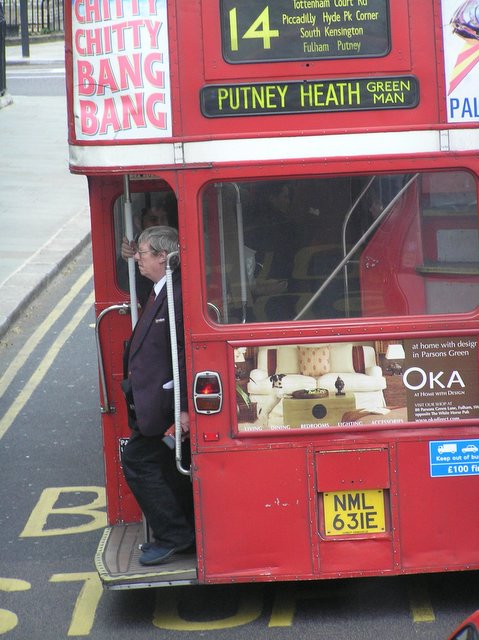
The BBC has reported the demise of the Routemaster bus on London bus routes:
http://news.bbc.co.uk/2/hi/uk_news/england/london/4510410.stm

The spindoctors have puffed the bus's alleged shortcomings, such as no wheelchair access, as hard as they can, but have not surprisingly ignored an assessment of the bus as "the best ever model" and "actually more accessible".
http://news.bbc.co.uk/2/hi/uk_news/england/london/4384318.stm

Does one need a PhD in industrial design to suggest that the rear platform could be modified to accommodate a wheelchair or two?

The companies who have grasped the opportunity to buy surplus Routemasters for a song and convert them into mobile bars etc have certainly shown a bit more initiative than Transport for London.
http://news.bbc.co.uk/2/hi/uk_news/england/london/4509706.stm

The real reason for the phasing out is shown in this photo, which I took in May this year: it is cheaper to replace one human being with an automated ticketing system and several security cameras.

Has anyone considered the potential security benefits of having a human observer to monitor passenger behaviour?

08 December 2005

More on the ABC favourite films

In today's Age Peter Craven has a piece about the ABC's favourite film show http://www.theage.com.au/news/opinion/movie-favourites-a-populist-grovel/2005/12/07/1133829659777.html. I don't agree with his suggestion that the survey should have been faked to produce a "more viable top 10" though I do agree with his conclusion that unless more is done to "treasure our film culture... it will be lost to history and we'll have a canon made up of last year's mush and modishness."

Response from Oxfam

Yesterday a person from Oxfam rang me to discuss the collectors doorknocking on my street. She stated that

  • The collectors were genuine
  • Oxfam has contracted an outside organisation (not named) to run the collection, and
  • This method has been used for about five years.

I did not ask, not was I told, how much of each dollar raised this way actually ended up with Oxfam.

06 December 2005

Oxfam diversifies its collection methods

Last evening I answered a knock at my door to find two young men standing there.

"Hi mate", said the one with the clipboard "have you heard of Oxfam?" I replied that not only had I heard of it but that I was a donor. End of discussion.

I wondered whether they were, despite their displaying what looked like Oxfam ID, genuine, so this morning I rang the Oxfam state office. I was told that Oxfam had engaged a contractor to collect door to door. I wonder how much of each dollar collected in this manner actually reaches Oxfam. In fact I wonder how much of each dollar that I donate to them actually reaches projects in the field...

05 December 2005

Next generation movie preferences?

Last night I watched ABC TV's program "My Favourite Film" which featured the top 10 films of a recent nationwide poll. http://www.abc.net.au/myfavouritefilm/top100.htm


The results show how far my preferences (see my blogger profile) differ from those of those who voted on this occasion. I can't say much about some of the films, eg Amelie, because I've not seen them, but then not all last night's panellists, of whom Stuart Macgill was both diligent in his viewing and perceptive in his comments, had either.

I'd expected the voting to reflect my stereotype of ABC (more specifically At the Movies) viewers: ageing, with middle to high-brow tastes. I'll need to think again about this and to fill the gaps in my film viewing. But I won't change my favourites for the time being.

02 December 2005

A man with his priorities right

According to this week's City Messenger (one of the Mr Murdoch's minnows). The Lord Mayor of Adelaide in his most recent fortnightly report listed the major events of the preceding 14 days. They were

1. Brian Lara's 226 in the Test.

2. Rupert Murdoch's visit to Adelaide.

3. Donald Rumsfeld's ditto.

I concur with this assessment.

29 November 2005

Help from above for cricket umpires?

To the cricket yesterday and today. Australia completed a comfortable and deserved win today. The turning point of the game IMO was the West Indies' failure to gain a significant first innings lead (at least 50) when they had the opportunity, though the margin of Australia's victory was exaggerated by poor umpiring from Billy Bowden and Aleem Dar.

Today Billy Bowden added to his mistakes of the previous days. He called a 5 ball over during the morning session and on one occasion stopped the bowler half way through his run up to upbraid the West Indian fielders for some alleged infringement, which looked and sounded to me like one man clapping before the ball was delivered.

These lapses seem odd for a man who has recently claimed that God is his "third umpire in a way" http://sport.telegraph.co.uk/sport/main.jhtml?xml=/sport/2005/11/09/scgad09.xml&sSheet=/sport/2005/11/09/ixcrick.html . It would be interesting to know how God communicates his decisions to Billy: on the cricket field they seem to come through very quickly and to favour Australia more than the opposition.

Perhaps there is something to be said for referring more decisions to a third umpire: an earthly one with access to good technology would suffice. Maybe the batting side should be given a certain number of challenges to umpire's decisions: this idea was discussed on the ABC radio commentary during the test. And "elite" umpire training needs to be reviewed.

Perhaps even the third umpire could be the ultimate decision making authority

27 November 2005

The hills and the valleys of test cricket

It was another very good day of test cricket at Adelaide Oval today, despite some lapses by the Australian middle order batters (note PC usage) and the West Indian fielders.

The first session was a la recherche de temps perdu (ie a throwback to the past): hard grafting with wickets falling regularly. 48 runs from 27 overs, for 4 wickets. Hey, this wasn't in the script but it was good to see the West Indian bowlers lift their game. Bravo was magnificent (as his name suggests) and even Fidel Edwards (will his name preclude him from gaining entry to Orstrailia when the new sedition laws are in force?) bowled at the stumps and earned a wicket.

Unfortunately for those who were hoping that the Windies would adminster the coup de grace after lunch. Fidel couldn't maintain the pressure and Hussey (who before lunch might have done more both to protect Symonds and to move the score along) and McGill took advantage of very slack bowling (what did Fidel E have for lunch to make him bowl so loosely afterwards?)

Ramdin dropped Gilchrist from a sitter (but AG didn't last much longer as Chanderpaul took a good catch). Hinds also dropped McGill from as easy a catch as must have ever been offered in test cricket. When the Windeis batted again Ricky Ponting at second slip caught Devon Smith with a catch that as good aas one could hope to see: Lee delivered at about 150km/hr, Smith edged downwards, Ponting moved forward (how could he in the nanosecond?), caught the ball and retained his balance.


26 November 2005

B Lara (cont)

Today Brian Lara scored another 24 runs which was sufficient to make him the top test match run scorer of all time. Congratulations to a master.

The ABC has engaged another master West Indian - Tony Cozier - as part of its radio commentary team. His comments are a combination of incisive analysis of the play and graphic description of the match ambience. IMO only Richie Benaud of current commentators rivals him.


25 November 2005

Another magnificent innings

Brian Lara finished the first day of the Australia - West Indies Test on 202 not out of a total of 7/352. His innings began with intense concentration and very careful, almost wary, shot selection. In the middle session he moved from 27 (out of 71) to 106 (out of 194) gradually revealing his full hand of strokes, while still maintaining his concentration apart from one or two foregiveable lapses. He sprinted to the 200 mark in an over in which he made Brett Lee (who otherwise bowled well) look like a net bowler, or parkland cricketer.

And this is his second great innings at Adelaide this year: the other his 156 against Pakistan in a one day international in January, which I also saw. Unfortunately I won't be able to be at the Adelaide Oval for the start of tomorrow's play but I feel as I've just consumed a magnificent meal - I'll leave the wine comparisons to the Cricinfo reporter who shares my opinion http://content-aus.cricinfo.com/ausvwi/content/story/227179.html.

24 November 2005

Letter to the Editor

Today's Advertiser published an open letter from Mr Rumsfeld "Secretary of Defence" (sic) thanking everyone for making his visit to "your beautiful city" such a success. Interestingly it was published in the Letters to the Editor section, and wasn't even the lead one. It did at least precede those written by the regular correspondents such as Paul Scott Wattle Park (today's contribution a characteristically pithy statement " Bring on TramsAdelaide") and Brian Wreford Morphett Vale (requesting express trains from Oaklands to Salisbury, a variation on his usual theme of extending the Noarlunga Line to Aldinga).

I wonder whether Mr R sends an open letter of thanks to the people of each city he visits. I'd like to see what he says to the citizens of Baghdad.

Despite Mr R's description of his meeting with Mr Downer and Senator Hill as "important talks" his visit to Adelaide doesn't rate on the "What the Secretary has been saying" section of the Defense Department website http://www.defenselink.mil/speeches/secdef.html . The only reference there to a town hall is a transcript of a "Town Hall Meeting" at MacDill Airforce Base on 11 October this year http://www.defenselink.mil/speeches/2005/sp20051011-secdef1981.html in which Mr R describes himself as a "broken down ex-cabinet officer".


17 November 2005

Donald ducks for cover?

All was quiet on the western North Terrace front at 7.30 tonight when I passed Fort Apache redux, aka the Hyatt. True, the fortifications were still in place and a good number of police in attendance, but there was no sign of any demonstrators.

At 9.45pm when I walked past on my way home it was a different matter. Several fire engines with lights flashing were parked in the vicinity and the police contingent was concentrated at the south eastern corner of the perimeter. It soon became evident why. The constabulary were trying, with limited success, to clear some of the barriers to open a passage for Mr Rumsfeld's entourage which, led by a wedge of police motorcyclists in arrow formation like a well-drilled bikie gang, swept imperiously across King William Street and came to a halt on North Terrace. As the entourage consisted of at least ten vehicles and a dozen motorcycles this took up quite a lot of the street. No doubt this wasn't quite as planned: did Mr R have to duck for cover?

Great Sporting Moments

This week I watched a great sporting moment: a triple century scored by Darren "Boof" Lehmann for SA against WA . While the opposition was below strength they were probably stronger than the current Bangladesh and Zimbabwe test teams so the achievement should not be devalued. Unfortunately the media ballyhoo about the Australia - Uruguay soccer match overshadowed the acknowledgement of this achievement. Even the Advertiser gave more prominence to the build up to the soccer.

I watched the match last night and was pleased with the outcome, though not for the first time thought it odd that an important game could be decided by a penalty shoot out.

Perhaps there could be a place in the finals - like a wild card - reserved for teams which have missed out because of penalty shootouts. Another competition would need to be arranged at relatively short notice but surely this wouldn't be too difficult.

By the way, was I the only Australian to be appalled by the rabidly chauvinistic tone of the SBS commentary? Have I been listening to too much cricket or is this now the new standard?

More dead heart than centre of the universe?

This week two pillars of the current world order (or a certain version thereof), Mr Murdoch and Mr Rumsfeld, have visited Adelaide. This has prompted some tongue in cheek remarks from commentators for example Christian Kerr in today's Crikey http://www.crikey.com.au/ (subscription may be required) about Adelaide being, at least for the moment, the centre of the universe.

The local media have matched this with stories about the city being locked down (Ch9 News today). I thought that I'd satisfy my curiosity (and check the accuracy of the reports) so went into the city early this afternoon. Everything looked quieter than usual, though there seemed to be more police and security people around. The 6pm Channel 9 news had a different story, with footage of the Hyatt (which I didn't go past) fortified and bag searches taking place.

I'll be heading in that direction soon (to see a movie, not to demonstrate) so will check out the situation again.

Yesterday Mr Rumsfeld was given a column in Mr Murdoch's Australian to expound his opinion about the strength of the Australian - US alliance http://theaustralian.news.com.au/common/story_page/0,5744,17258445%5E7583,00.html. In this he makes some comments about the military commission process which draw a very long bow: it "is fair, it is time tested and was a process by which several detainees were brought to justice [sic] during and after World War II."
For alternative views see http://www.llrx.com/features/military.htm and http://news.bbc.co.uk/1/hi/world/americas/1701789.stm. Note the BBC presenting two sides of the question.

13 November 2005

Miss Julie

ABC Radio National is my default radio station (except when test cricket is being broadcast) and Life Matters is one of my favourite programs. Last Friday however I was, to put it mildly, annoyed by a blatant combination of product placement and job interview featuring Julie McRossin. http://www.abc.net.au/rn/talks/lm/stories/s1502494.htm

Julie was puffing Forever Yours: Australia's Hidden Love Letters, a compilation of material submitted by Life Matters listeners, which she has co-edited (whatever that means). She was her customary eloquent self and admitted that she was now relying on speaking engagements to keep the wolf from the door. I'd thought that someone of her erudition (for an example see http://www.takver.com/history/womyn.htm) would have no difficulty finding work. On air she implied that she might be open to other offers (she didn't mention returning as presenter of Life Matters but this no doubt came to many regular listeners' minds).

IMO Julie has burnt her Life Matters boat and should not, repeat not, be reinstated. Since she left several presenters have been tried: all have been competent, and some eg Sarah McDonald and Richard Aedy, have been outstanding. The ABC should give Miss Julie a miss.


.

09 November 2005

Water over the bridge? Observations of the Adelaide floods 8 November 2005

Yesterday I was planning to walk in the Adelaide Hills. The heavy rain precluded this but I decided to visit a couple of the places where the media (particularly the ABC, for whom thanks despite a quibble or two about terminology) had reported that floods either threatened or had occurred.

Waterfall Gully Road

In the middle of the day a kind of order, represented by the CFS, SES, Burnside Council and the police, had been restored though no Canute figure had emerged to bid the waters to recede. A lot of damage had been done to both public and private property, which made me wonder

(1) Given the history of flooding on Waterfall Gully Road, what contingency plans had been made, and by whom, to deal with future flooding?

(2) What if any measures were taken, when and by whom, to alert residents to the emerging threat of flooding over the preceding 24 hours?

(3) Who authorises development along Waterfall Gully Road, especially in its flood prone areas?

(4) Are there any proposals for development in these flood prone areas currently
before the development authorities and, if so, what, if any, impact will yesterday's events have on the eventual decision/ recommendation?

Onkaparinga River at Old Noarlunga

Here there was abundant evidence of effective planning and timely response.
The houses at risk had been identified (based on previous flood threats) and protected with a layer of sandbags laid by what appeared to be a functional coalition of the willing including the local council and the CFS (community based volunteers). I was there in the mid- afternoon when the water was rising rapidly, but measures were clearly in place to deal with any threats.

Although Old Noarlunga is low lying and situated on an oxbow bend of the river it has many aged buildings which must have survived previous floods or threats thereof. I wonder why. Did the early white settlers have regard to the vicissitudes of nature and build above the high water line? Did they draw upon the knowledge of the local Aboriginal people to help determine optimal building sites?

Media Coverage

Considering the main news story of the day (terrorism suspects arrested, and the media generously fed with information ), today's Australian had a reasonable report with photos, including one of Waterfall Gully Road (which may have been taken with a very wide angle lens). The Advertiser 's coverage didn't get below the froth as it concentrated on some Christmas decorations which were swept away down the Torrens, though it also warned of the danger of sharks gorging on the dead fish swept out to sea by the Torrential torrent .

One minor black spot was the solecism of the ABC reporter at Noarlunga who described a "swing bridge" across the river when he could only have meant a suspension bridge (I was within eyesight of his ostentatiously decorated ABC vehicle when I heard his live report on the 3pm news).

I can (up to a point) cope with allegations of left-wing bias at the ABC, but when it comes to poor English expression it is harder to defend such lapses, even if they were perpetrated by a person better known (to me at least) as a sporting commentator . Does the ABC have a re-education program for such people?

Where to from here?

Floods are uncommon, but not rare, in and around Adelaide so it's not surprising that some problems have resurfaced. No doubt the state government, local councils and Uncle Tom Cobbley and all will be assuring the media that all is well and that those for whom all is not well will be given $700 to assuage the short term pain (and the donors' consciences). No doubt development processes will continue to permit houses to be built in flood prone areas without any flood mitigation procedures in place.

To be fair, some measures are being put in place.See for example
http://www.bom.gov.au/weather/sa/inside/flood_history/who_involved/who_involved.htm
You may well wonder what contribution so many disparate groups can make
to an understanding of floods in SA, let alone to coming up with moderately effective proposals to respond to the next set of problems.

02 November 2005

Worth how many words?

The Bill Leak cartoon in today's Australian http://theaustralian.news.com.au/cartoon is IMO a magnificent summary of the current Australian political environment.

As if to demonstrate that written words are capable of matching pictures, Paul Kelly's opinion piece immediately underneath the cartoon http://theaustralian.news.com.au/common/story_page/0,5744,17109859%255E12250,00.html shows that not only the Leader of the Opposition is hedging his bets:

"Australia's public mood seems more decoupled than ever from the sheer complexity of Iraq. This contest is not a morality play. It is about the balance of power in the region, the balance of power in the war on terrorism and how to minimise the damage from Bush's disastrous 2003 intervention."

It will be interesting to see who responds to each of these items, and how.

31 October 2005

Since when has it been illegal to take photos at Australian airports?

Yesterday I went to farewell my daughter and grandchildren, who were returning to London after an all too brief visit. The new Adelaide airport terminal allows visitors accompanying departing passengers to go beyond the security screening. As I had not divested myself of all the sharp objects in my possession I decided not to go beyond the gate but instead to take a photograph of the family.

As I pointed my camera at the grandchildren one of the officials overseeing the security screening barked at me that photographs weren't permitted. There were no signs stating this, and I was not aware that it was now forbidden in Australia. It is not uncommon overseas, but I'd like to know the nature and extent of the prohibition. Is all photography on airport land forbidden, or just near the departure gates, or what? What about the penalties? Will malefactors be subject to the forthcoming anti-terrorist laws with their attendant threats of detention without trial and isolation from friends and family?


21 October 2005

Does Mr Murdoch speak the same language?

While I'm not a paid up member of his fan club (or even a shareholder in News Corp), I have to admit to a soft spot for Rupert Murdoch, or at least some of the things he says and does. In today's Australian (p19 "Rupert netted by web's potential") he's quoted as saying "The more we think about it the more the internet fits into our whole modus vivendi" .

While using a foreign phrase (even from a dead language) violates some people's idea of correct English expression it does suggest that the great man has a deeper appreciation of the potential of language than many of his employees, for example the headline writer and whoever thought it necessary to translate the phrase. Perhaps Mr Murdoch could run a few master classes for some of his acolytes?

Cruise Ship Australia hits stormy weather: or whose Titanic conceit?

A week after it was published in the Bulletin the storm created by David Williamson's article comparing Australia to a cruise ship (see http://www.bulletin.ninemsn.com.au/bulletin/site/articleIDs/19DB1992F58E0305CA25707D000CDC14 )has, after briefly abating, increased to gale force thanks to some media luminaries who seem to have belatedly found enough wind to fill their sails (and if you think this goes over the top with nautical cliches just read what others have written).

This morning Gerard Henderson gave ABC RN Breakfast listeners his exegesis of the article; and some of the other usual media suspects have weighed in (try a Google search if you want to read them). But please note that their comments are but zephyrs to the gale force of the Australian's coverage, which began with its lead editorial on Wednesday "Titanic Conceit: if artists reject ordinary people, they are the losers". With a headline like this, who needs any further explanation? Probably not the aspirationals.

Thursday produced a (predictable) rejoinder from David Williamson, while today the Letters to the Editor began with an obsequious puff for the Oz from Dr Rachel Birati, who claimed that the editorial was "a meticulous work of art".

What next? If the Oz editorials are now, in the opinion of Dr Birati (a Monash uni academic), works of art, are they now eligible to be included in HSC English syllabi (or syllabuses)? Or will they be included in Dr Birati's course on Literature of Destruction and Redemption to be offered at Monash University in Semester 2 next year?

Through a guided study of appropriate literary texts, students will be able to explore the theme by focussing separately on destruction and redemption and then viewing them both in a unified way. Students will be directed to important critical material and will be guided through a variety of audio-visual aids.
(emphasis added)

Might Williamson's piece meet Dr Birati's criteria as an exemplum of destruction? If so, surely the Oz's editorial and Gerard H & co's responses would qualify as appropriate exempla of redemption.
What happens to the student who challenges the direction and guidance of the course coordinator, whether directly or indirectly (via assessment)? Will the Australian, Gerard Henderson or Uncle Tom Cobbley and all go into print about this threat to academic freedom? Or is this the new PC (aka neo-con toeing the line)? I won't hold my breath waiting for a response.


19 October 2005

Update on underemployment and welfare reforms

The issue of unemployment and welfare reform and the links between them have been kept on the front - well middle - burner in the media today with more comments from Barnaby Joyce, the Salvation Army and the CFMEU see http://theaustralian.news.com.au/common/story_page/0,5744,16965175%255E2702,00.html.

The Salvos deserve special praise because their employment services arm is a major beneficiary of government largesse. Will some of the other big players now step forward and support them?

My post yesterday was more concerned about underemployment, though of course this is linked to unemployment. I was nevertheless pleasantly surprised, via a letter in today's Crikey, to see that in WA there exists an Organisation of Un(der)employed People. They don't seem to have a website but in a previous incarnation appear to have called themselves a Union - surely the union movement hasn't forced them to change their title? They, with many others (albeit hardly a representative sample of Australian society) gave evidence to a parliamentary committee in 2003 http://www.aph.gov.au/house/committee/ewrwp/paidwork/appendixd.htm.

Mary Jenkins, the Secretary of the Organisation (formerly known as the Union), gives a graphic example in her letter to Crikey:

A person on Newstart can earn $62 a week without paying extra tax. This will not cover the resent rise in the cost of living. If they earn up to $120 extra they pay 50c in the dollar tax, which means half of what they earn goes to the government. Anything over $120 they pay the Government 70c in the dollar. So these people are working for 30c if they earn more than $120 above the Newstart allowance.


18 October 2005

Unemployment fruit salad

In today's Crikey lead story (http://www.crikey.com.au: subscription required) Christian Kerr discusses how "unemployment" is defined differently around the world. He compares Australia, where a person who works for an hour a week is deemed to be employed, to Germany, where someone who works less than 15 hours a week and wants to work more is considered to be unemployed. He points out that these differences dilute the force of the claims made by Messrs Howard and Andrews about our high position on the global employment league table.

Sure, it's good to see more people in work, but what about the underemployed: those who don't qualify as unemployed ? For example, mature age people who struggle to survive in home based businesses or rural workers reliant on seasonal work. Where are the programs or funding support to help them?

In the last few years the goverment has funded many worthy programs and fostered the growth of a privatised employment services industry which has seen large for-profit organisations do very nicely thank you. The industry and the government have developed a cosy relationship where even the older, often church and community based, non profit organisations almost invariably choose to take the government's money and run its programs. By doing so they become de facto government agencies for whom self-interest engenders a reluctance to criticise any government policies (and ideologies?).

Is there any organisation which speaks in any more than a whisper on behalf of the underemployed?


13 October 2005

Who called Bob "Judas"?

This question does not refer to the recently superannuated Premier of NSW's decision to accept a reported half million pieces of gold for doing some consultancy work, so the answer is not "most Australians with a well developed moral sense".

An Adelaide giveaway paper has offered a copy of the Bob Dylan No Direction Home soundtrack CD to the first four people who can identify the irate fan who shouted out "Judas" at a 1966 concert in the UK (when Dylan reverted to electric music). A Google search has narrowed the field down to two: John Cordwell and Keith Butler. See

http://enjoyment.independent.co.uk/music/features/article314340.ece ( Cordwell's claim)

http://www.expectingrain.com/dok/who/b/butlerkeith.html. (the case for Butler with a nod in J C's direction).

I've neither the time nor the inclination to peruse the 21,100 or so links Google has thrown up and it's too late to claim a prize, but it would be interesting to know what the correct answer is.

12 October 2005

Lifeboat drill on Cruise Ship Australia

Today's Bulletin features an article by David Williamson in which he uses a recent cruise as a starting point for some trenchant criticisms of modern Australia.

http://bulletin.ninemsn.com.au/bulletin/site/articleIDs/19DB1992F58E0305CA25707D000CDC14

It didn't take him long to see underneath the veneer of shipboard glitz:

it soon became apparent... that all wasn't to be plain sailing. The ship was stacked to the gunwales [sic] with John Howard’s beloved “aspirational Australians”.
The dinner conversation made this plain. They aspired to all manner of things: to holidays like this, to new cars, to kitchen refits, to renovations, to private education for their children, and to practically anything made of plastic, wood or steel. The one surefire topic of conversation that connected erstwhile strangers was price comparisons.

Bob Carr wasn't on board (Williamson couldn't identify any Proust readers) so the cultural deficit had to be made up by recollections of a cruise past:

A British cruise line took us from Hong Kong down through Vietnam, Cambodia and on to Singapore. Excellent lecturers from Oxford and other major universities gave talks morning and afternoon about the geography, history, culture and art of the places we were about to visit. It was like a floating university of the very best kind, and we had to arrive early and fight for seats as hordes of ageing but fit and mentally alert English jostled for front spots, many taking copious notes...In contrast to the mindless hedonism of the Australian cruise we were presented with a world of sharp and complex reality. Discussion at dinner was a lively examination of what we’d seen and its implications. The creative heights and the brutal depths of human potential resonated powerfully in our imaginations.

Cultural binge or cultural cringe?

Back on Cruise Ship Australia no one so much as mentioned the plight of the real aspirationals on board, the Indonesian and Filipino crew members who were away from their families on low-wage contracts for up to 10 months, or queried why they had one kind of lifestyle and we had another.

So the British cruise line vessel had an entirely British crew (and faculty)? We're not told.

Next Williamson shifts his focus to the environment. Australians have inherited [?] a very fragile ecosystem; probably after Iceland, the most fragile in the world .


He is pessimistic about the future but, somewhat oddly given his attitude elsewhere, endorses the economic rationalist view that farming should be shut down to buy time.

Then he concludes with a stirring rhetorical flourish


If you believe in a wider set of values than accumulating material affluence, wear it as a badge of honour next time some self-righteous journalist uses the word “elites” pejoratively against you. An obsessive focus on material acquisition, encouraged by governments who worship economic growth and little else, have locked us into a probable long-term disaster scenario for Cruise Ship Australia and for the planet as a whole.

This is all very highminded. It's difficult not to agree with many of his general points, though I'd have like to have seen him make them more subtly, and maybe even suggest how to change Cruise Ship Australia's (and perhaps Cruise Ship Earth's) course.

08 October 2005

Robert Zimmerman

I've just bought the DVD of No Direction Home, Martin Scorsese's doco about Bob Dylan from his musical beginnings (not long after his birth it seems) until the mid 60s. It's long (though not too long for those acquainted with Scorsese's other docos) yet well worth viewing if you're interested in Robert Dylan Zimmerman or documentary film making or both. The backbone of the film is archival footage, much of which was unfamiliar to me, of performances and events, fleshed out with recently filmed interviews with Bob and other luminaries eg Joan Baez and Allen Ginsberg, some of whom have weathered the passage of time better than others.

It's possible to program the DVD to play the Dylan music from the movie and, by drilling down into the Special Features menu, to play a few songs without commentary voiceover or interruption.


Apart from the music there's a great scene of a concert in the UK in the mid 60s where the national anthem (God Save the Queen) was played, perhaps partly as a crowd control device, to give Bob a chance to escape from those whose who'd taken umbrage at his conversion (in fact reversion) to electric guitars etc . This stratagem did not seem to be very successful but it reminds those like me who lived in the 60s how many things have changed. Another example is the number of male musicians who performed wearing ties.

02 October 2005

Why?

Woke this morning to the news of the latest Bali bombings. Apart from reporting the casualities the media, understandably in the circumstances, is asking "who did it?".

Last night, thanks to a friend, I was able to get a ticket to Robert Fisk's Edward Said Memorial Lecture at Adelaide University. Anyone who knows anything about Fisk will be aware of his reputation as a controversial journalist, especially for his support for the Palestinian cause.

I thought the lecture was an eloquently delivered piece of moderate advocacy for the Palestinian cause. Fisk interleafed his talk with footage from a 1993 Discovery Channel program he'd made which showed the dispossession of Palestinian Arabs in stark detail. Not surprisingly, complaints from certain quarters (any guesses which?) resulted in the program being banned from further screenings.

In the lecture Fisk didn't propose any solutions, but when asked during question time he suggested that any settlement had to be based on UN Resolution 242
http://domino.un.org/unispal.nsf/0/59210ce6d04aef61852560c3005da209?OpenDocument. He did acknowledge that the resolution was a starting (or re-starting) not a finishing point but didn't elaborate in any detail.

He also didn't say much about Iraq until question time, when he stressed the importance of always asking why things happened, not just how they did and who was responsible . He quoted statements made around the end of WW1 by politicians such as Lloyd George, the then British PM, which are still chillingly relevant today.

I don't think the lecture has yet been published but it deserves to be. In the meantime to find out more about Robert Fisk and to read some of his other work see http://www.robert-fisk.com/ .

There's plenty of material about Resolution 242 : for a summary see http://en.wikipedia.org/wiki/UN_Security_Council_Resolution_242 .